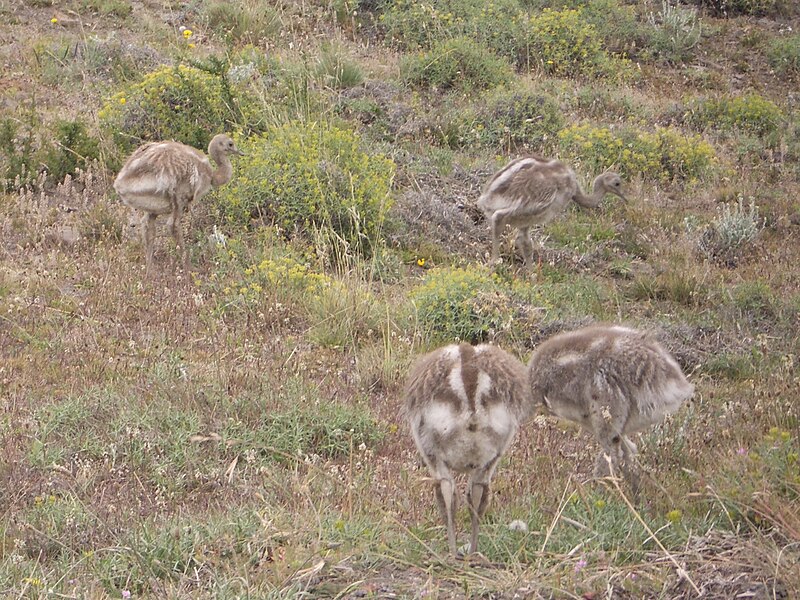
Darwin's Rhea Observation: Key Evidence for Evolutionary Theory
United Kingdom
Science
Evolution
4 min read
Updated By: History Editorial Network (HEN)
Published:
Updated:
Charles Darwin encountered compelling evidence of species adaptation and geographical distribution during his expedition with HMS Beagle. While exploring South America, Darwin observed two distinct species of rhea, large flightless birds found in South America. These species were geographically separated but displayed notable similarities, suggesting a shared ancestry. Darwin noted that the lesser rhea (Rhea pennata) inhabited the southern regions, while the greater rhea (Rhea americana) resided in the northern regions.
This observation contributed significantly to his developing theory of natural selection. By identifying the adaptations in different environments, Darwin inferred that species are not fixed entities but change over time due to environmental pressures. This was contrary to the prevailing belief in the immutability of species. The geographical distribution of the rheas, along with varying characteristics, supported the idea that new species arise through adaptation to their environments.
Darwin's detailed observations and meticulous collection of specimens during this period later influenced his seminal work, "On the Origin of Species." The evidence he gathered from different species, including the rheas, laid a foundation for the concept of evolution by natural selection.
These findings not only challenged existing scientific thought but also provided a framework for understanding biodiversity and the processes that drive the evolution of life on Earth. The impact of Darwin's observations extended beyond ornithology, influencing fields like ecology, genetics, and biogeography.
#Darwin #Evolution #NaturalSelection #GeographicalDistribution #Rhea #TheoryOfEvolution #ScienceDiscovery #HistoryOfScience #MoofLife

Explore the Life Moments of
 AI Twin