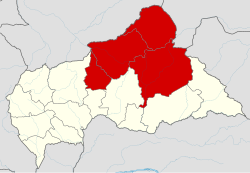
Sultanate of Dar al-Kuti Established
Central African Republic
Political
Cultural Heritage
3 min read
Updated By: History Editorial Network (HEN)
Published:
Updated:
In 1830, the Sultanate of Dar al-Kuti was established in Central Africa, ushering in a new era for the region. The Sultanate was founded by an alliance of local leaders, aiming to create a unified administration and protect their territories from external threats. This marked a significant shift in power dynamics, consolidating authority under the Sultan's rule.
Under the leadership of the Sultan, Dar al-Kuti experienced stability and economic growth. Trade routes were expanded, fostering commerce with neighboring regions. The Sultanate's strategic location enabled it to control key trade routes, enhancing its influence in the area. The establishment of Dar al-Kuti brought about improved infrastructure, including the construction of mosques and schools, promoting cultural and intellectual development.
The Sultanate of Dar al-Kuti played a crucial role in shaping the political landscape of Central Africa, uniting diverse ethnic groups under a common leadership. This unity strengthened the region against external threats and internal conflicts, fostering peace and cooperation among different communities.
The legacy of the Sultanate of Dar al-Kuti endures in the cultural heritage of Central Africa, reflecting a period of political consolidation and economic prosperity. This pivotal moment in history underscores the significance of unity and leadership in shaping the destinies of nations. #SultanateOfDarAlKuti #CentralAfricaUnity #CulturalHeritage
Primary Reference
Sultanate of Dar al Kuti

Explore the Life Moments of
 AI Twin