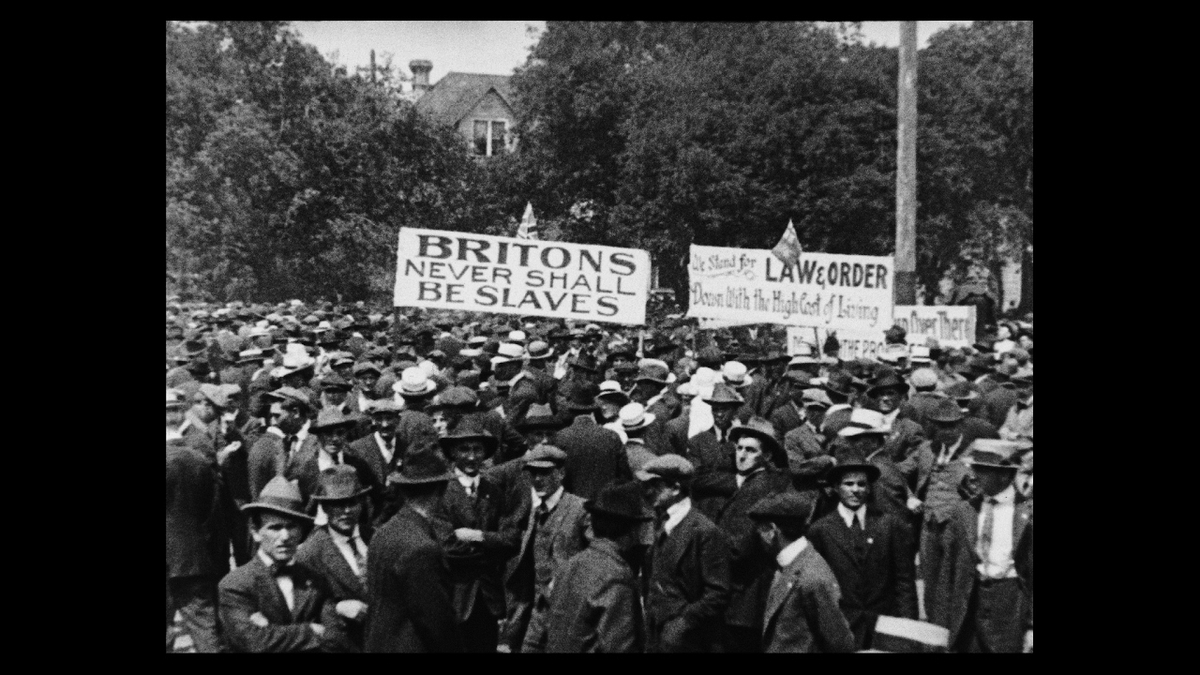
Winnipeg General Strike: One of Canada's largest labor movements in history.
Canada
Political
Labor Uprising
7 min read
Updated By: History Editorial Network (HEN)
Published:
On May 15, 1919, the Winnipeg General Strike began, marking one of the largest and most influential labor movements in Canadian history. It was a pivotal event that not only showcased the growing discontent among workers but also highlighted the broader social and economic tensions of the post-World War I era in Canada.
Background
The origins of the Winnipeg General Strike can be traced back to the end of World War I. Returning soldiers, alongside existing workers, faced high unemployment rates and rising inflation, which severely eroded their purchasing power. The economic hardship was compounded by dismal working conditions and the refusal of many employers to recognize labor unions.
The Strike Begins
The immediate catalyst for the strike was the breakdown of negotiations between management and workers in the building and metal trades. When talks stalled, the Winnipeg Trades and Labor Council (WTLC) called for a vote among its members, resulting in overwhelming support for a general strike. At exactly 11:00 AM on May 15, about 30,000 workers—virtually the entire workforce of Winnipeg—walked off their jobs.
The Strike's Impact
The strike brought Winnipeg to a standstill. Public services halted, factories closed, and even essential services like fire-fighting were performed by volunteers. The strikers were remarkably unified, transcending divisions of skilled and unskilled, immigrant and native-born workers.
Government Reaction
The response from government and business leaders was swift and severe. They viewed the strike as a revolutionary threat, influenced by the recent Russian Revolution. The Committee of One Thousand, composed of Winnipeg’s most influential citizens, was formed to oppose the strike and coordinate efforts to break it. They controlled the narrative through the press, depicting the strike as a radical threat to the nation.
Bloody Saturday
Tensions culminated on June 21, 1919, an event known as "Bloody Saturday." The North West Mounted Police charged into a crowd of strikers, killing two and injuring dozens. This violent clash led to the arrest of several strike leaders, and by June 26, the strike was officially called off.
Aftermath and Legacy
The end of the strike did not mean an immediate improvement in workers’ conditions, but it had a lasting impact on Canada’s labor landscape. The strike highlighted the need for legal reforms in labor relations, eventually leading to the recognition of collective bargaining rights in Canada. Many of the strike leaders went on to have significant careers in politics and labor organization, shaping policies for decades to come.
The Winnipeg General Strike remains a symbol of the struggle for workers' rights and the collective power of unions. It is remembered as a critical moment that shaped the course of Canadian labor history, demonstrating the profound impact of solidarity among workers from diverse backgrounds.
The Winnipeg General Strike of 1919 is an emblematic episode in the history of labor movements in Canada, reflecting the broader struggles of the working class during a period of significant social and economic upheaval. Its legacy is evident in the improved rights and conditions for workers that gradually followed in its wake.
#WinnipegGeneralStrike #CanadianHistory #LaborRights #WorkersUnite #SocialJustice #MomentsOfLife #MoofLife_Moment #MoofLife
Primary Reference
Winnipeg General Strike of 1919 | The Canadian Encyclopedia

Explore the Life Moments of
 AI Twin