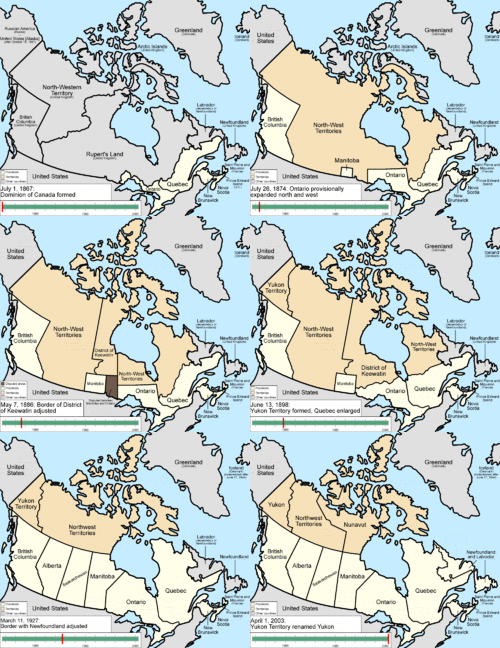
Creation of Alberta and Saskatchewan provinces in Canada's history holds significance for the nation.
Canada
Political
Economic Growth
3 min read
Updated By: History Editorial Network (HEN)
Published:
Updated:
In 1905, the provinces of Alberta and Saskatchewan were established in Canada. This move was a result of the growing population and the need for more effective governance in the region.
The creation of these provinces had a significant impact on the political landscape of Canada, as it allowed for more localized decision-making and representation within the federal government. Alberta and Saskatchewan were now able to govern their own territories, manage their resources, and address specific local needs.
The establishment of the provinces also brought about economic growth and development, particularly in industries such as agriculture, mining, and oil. Both Alberta and Saskatchewan became key players in Canada's economy, contributing to the nation's overall prosperity.
The creation of Alberta and Saskatchewan marked an important step in the evolution of Canada as a nation, showcasing its commitment to decentralization and regional autonomy. It also highlighted the diverse cultural and geographical landscape of the country, with each province bringing its own unique identity to the Canadian mosaic.
#Alberta #Saskatchewan #ProvinceCreation #CanadaHistory
Primary Reference
Alberta and Confederation | The Canadian Encyclopedia

Explore the Life Moments of
 AI Twin