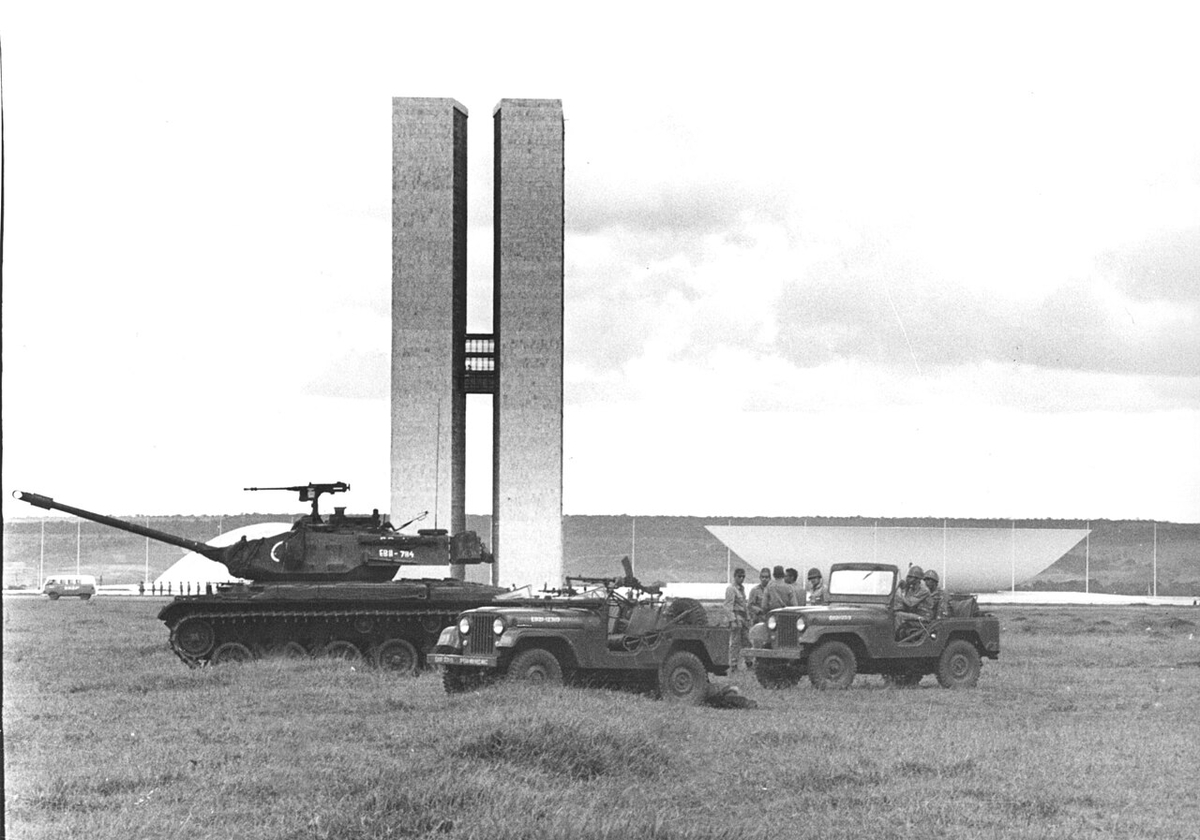
Military Coup Leads to Dictatorship
Brazil
Political
Human Rights Abuses
3 min read
Updated By: History Editorial Network (HEN)
Published:
In 1964, a military coup occurred in Brazil, leading to the establishment of a military dictatorship. The coup was backed by conservative military sectors, business elites, and foreign interests, aiming to remove President João Goulart, whose administration was perceived as a threat to their power and interests. Goulart's progressive policies, including land reforms and labor rights, had sparked fears of communism among the ruling classes and the United States.
Following the coup, civil liberties were constrained, political opposition was suppressed, and censorship was imposed on the media. The military regime implemented economic policies favoring multinational corporations and the wealthy elite, exacerbating social inequalities. Dissent was met with repression, including torture, forced disappearances, and censorship. Thousands of Brazilians were subjected to human rights abuses during the dictatorship, which lasted for over two decades.
The legacy of the military dictatorship in Brazil is marked by a dark chapter in the country's history, with lasting effects on its society and political landscape. Despite the eventual transition to democracy in the late 1980s, the wounds of the dictatorship continue to resonate in Brazilian society, shaping debates on memory, justice, and accountability.
#Brazil #MilitaryCoup #Dictatorship #HumanRightsAbuses #PoliticalRepression #TransitionToDemocracy

Explore the Life Moments of
 AI Twin