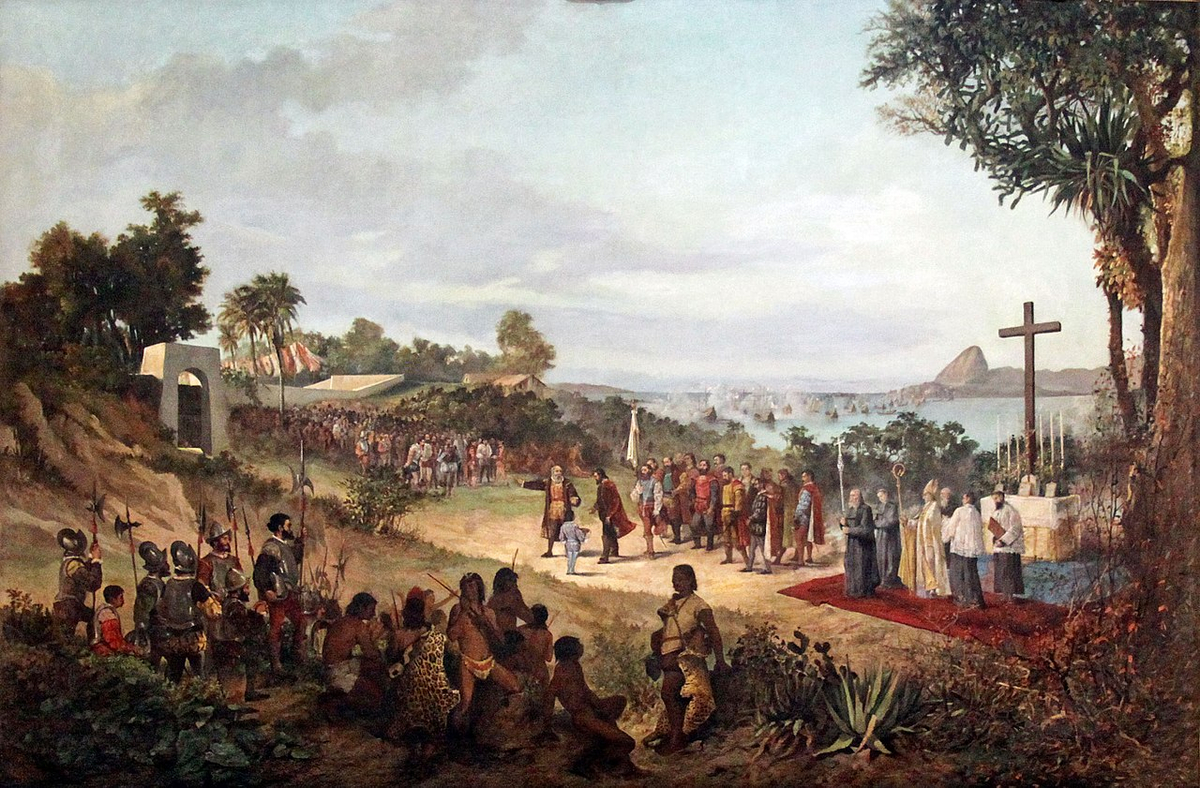
Founding of Rio de Janeiro
Brazil
Colonisation
Economy
9 min read
Updated By: History Editorial Network (HEN)
Published:
Founding of Rio de Janeiro
The founding of Rio de Janeiro is a pivotal moment in Brazilian and colonial history. It dates back to March 1, 1565, when the Portuguese established the city in response to the growing French presence in the region. To understand the context and significance of Rio's founding, we need to delve into the intricate tapestry of colonial rivalry, exploration, and the quest for control over the South American coast.
The Context
In the mid-16th century, Brazil was a newly discovered territory under Portuguese dominion, following the Treaty of Tordesillas in 1494, which divided the New World between Spain and Portugal. However, this vast and relatively unguarded land attracted the attention of other European powers, including the French. The French sought to capitalize on the lucrative resources of the New World, particularly brazilwood, which was highly valued for its dye.
The French Challenge
By the 1550s, the French had established a foothold in the Guanabara Bay area, calling their settlement "France Antarctique." Led by Nicolas Durand de Villegagnon, the French built Fort Coligny on an island in the bay and began to develop their colony. This was seen as a direct challenge to Portuguese claims in Brazil and a potential threat to their dominance in the region.
The Portuguese Response
The Portuguese Crown, recognizing the threat posed by the French, decided to take decisive action. King John III of Portugal appointed Estácio de Sá, a military officer and nephew of the then-Governor General of Brazil, Mem de Sá, to lead an expedition to expel the French and secure Portuguese control over the area.
On March 1, 1565, Estácio de Sá and his forces landed on the shores of Guanabara Bay. They established the city of São Sebastião do Rio de Janeiro, naming it in honor of Saint Sebastian, the patron saint of the Portuguese monarch, King Sebastian I. The name "Rio de Janeiro," which translates to "January River," originated from the mistaken belief by early explorers that Guanabara Bay was the mouth of a large river, discovered in January 1502 by Portuguese navigators.
The Struggle for Control
The initial years of Rio de Janeiro's existence were marked by fierce battles with the French. Estácio de Sá, along with indigenous allies from the Tupiniquim tribe and Portuguese settlers, engaged in numerous skirmishes to drive out the French. These conflicts culminated in the decisive Battle of Guanabara on January 20, 1567. In this battle, Estácio de Sá was mortally wounded by an arrow, but the Portuguese emerged victorious, effectively ending French attempts to establish a permanent colony in the region.
The Growth of Rio de Janeiro
Following the defeat of the French, Rio de Janeiro began to grow as a Portuguese colonial city. It became an important port for the export of sugar and later gold, which were the mainstays of the colonial economy. The city's strategic location also made it a key military and naval base, crucial for the defense of the southern part of the Portuguese Empire in the Americas.
Over the centuries, Rio de Janeiro transformed from a small fortified settlement into a bustling metropolis. It became the capital of the Viceroyalty of Brazil in 1763 and later served as the capital of the United Kingdom of Portugal, Brazil, and the Algarves when the Portuguese royal family fled to Brazil during the Napoleonic Wars in 1808. Rio remained the capital of Brazil until 1960, when Brasília was inaugurated.
Legacy
The founding of Rio de Janeiro is more than just the establishment of a city; it represents the strategic, economic, and cultural ambitions of the Portuguese Empire in the New World. Today, Rio is known for its vibrant culture, iconic landscapes, and historical significance. The city's origins are a testament to the complex interplay of exploration, conflict, and colonization that shaped the history of the Americas.
Hashtags
#MomentsOfLife #MoofLife_Moment #MoofLife #RioDeJaneiro #BrazilHistory #ColonialRivalry #PortugueseEmpire #FrenchAntarctique #EstácioDeSá #GuanabaraBay
Primary Reference
Rio de Janeiro

Explore the Life Moments of
 AI Twin