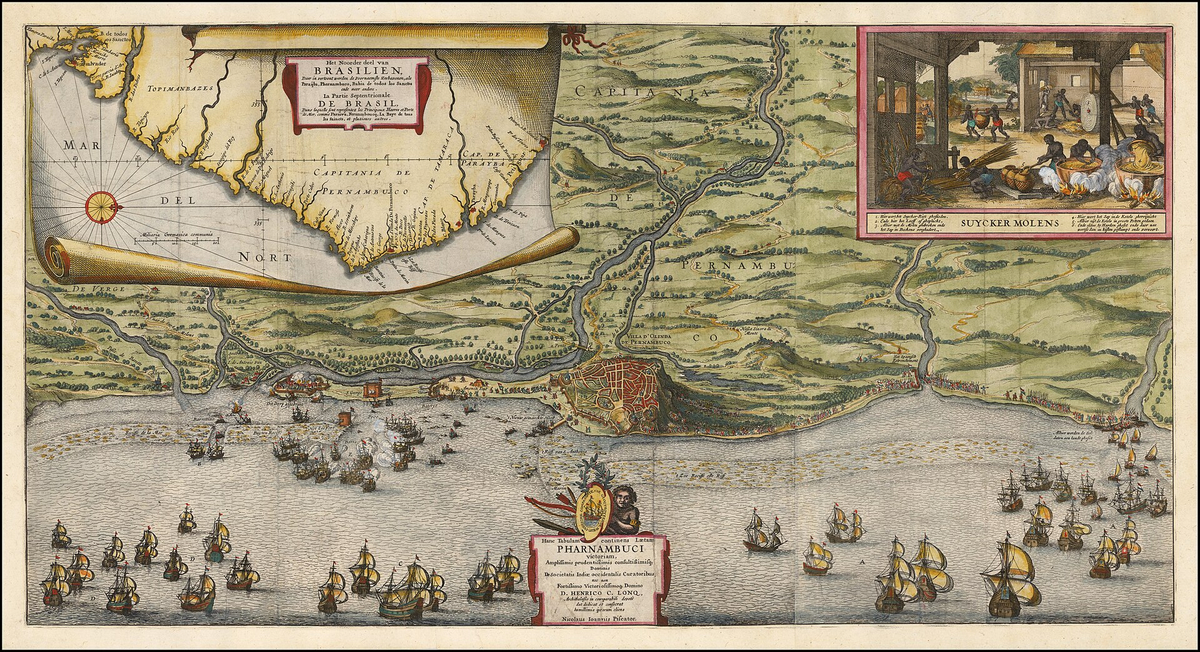
Dutch West India Company invades Portuguese colony Bahia in Brazil
Brazil

Global Trade
Economic Downturn
3 min read
Updated By: History Editorial Network (HEN)
Published:
The Dutch West India Company invaded the Portuguese colony of Bahia in Brazil amidst the 17th-century colonial rivalry. The Dutch aimed to control the profitable sugar production in the region. They swiftly captured the capital city of Salvador, establishing their rule over the colony.
The invasion had a significant impact on the region's economy and trade. The Dutch introduced their efficient agricultural techniques, improved infrastructure, and promoted religious tolerance, attracting settlers from Europe. However, their strict trade policies and heavy taxation led to discontent among the local population.
The Portuguese forces, supported by indigenous tribes, launched multiple attempts to recapture Bahia. After a long and bloody struggle, the Dutch were eventually driven out of the colony.
The invasion of Bahia by the Dutch West India Company remains a pivotal event in Brazilian history, highlighting the fierce competition among European powers for control of valuable overseas territories. It also underscores the enduring influence of colonialism on the socio-economic development of the region.
#DutchWestIndiaCompany #PortugueseColony #ColonialRivalry #SugarProduction #EconomicImpact #BrazilianHistory #EuropeanSettlers

Explore the Life Moments of
 AI Twin