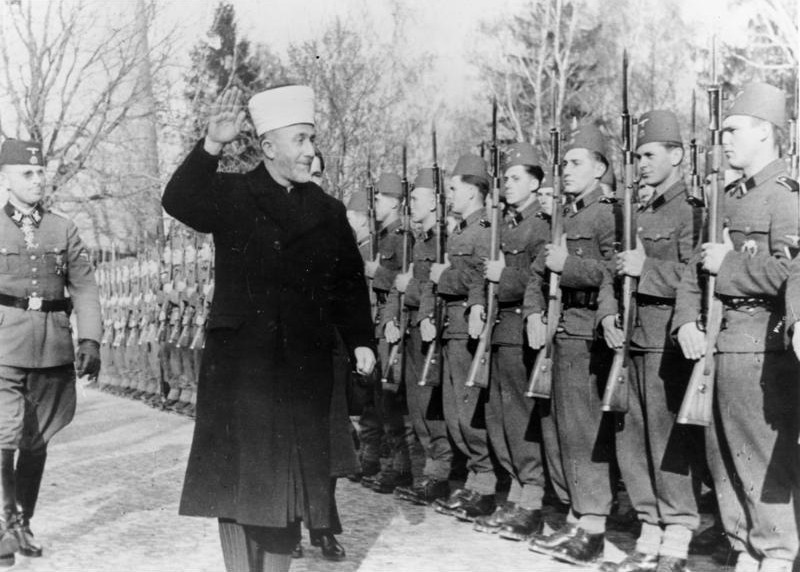
German Occupation in World War II
Bosnia and Herzegovina
WWII
10 min read
Updated By: History Editorial Network (HEN)
Published:
The German occupation of Bosnia and Herzegovina during World War II is a significant and harrowing chapter in the region's history. Bosnia and Herzegovina, part of the Kingdom of Yugoslavia at the time, found itself thrust into the chaotic upheaval of war following the Axis invasion of Yugoslavia in April 1941. The German occupation, which began shortly thereafter, had profound and lasting consequences for the region's population, setting the stage for intense conflict, resistance, and profound suffering.
The Invasion and Occupation
On April 6, 1941, Nazi Germany, alongside Italy, Hungary, and Bulgaria, launched a swift and brutal invasion of Yugoslavia. The Kingdom of Yugoslavia, an ethnically diverse state created after World War I, quickly collapsed under the military might of the Axis powers. By April 17, the country had surrendered, and its territory was carved up among the Axis powers and their puppet states. Bosnia and Herzegovina, with its complex ethnic composition of Muslims (Bosniaks), Orthodox Serbs, and Catholic Croats, was incorporated into the newly established Independent State of Croatia (NDH), a fascist puppet state of Nazi Germany and Fascist Italy.
Life Under the Ustaše Regime
The NDH, under the leadership of the Ustaše regime, embarked on a campaign of terror aimed at creating an ethnically pure Croatian state. This campaign included the systematic persecution and extermination of Serbs, Jews, Roma, and political opponents. In Bosnia and Herzegovina, the Ustaše implemented brutal policies of ethnic cleansing, leading to mass killings, forced conversions, and deportations. The infamous concentration camp Jasenovac, often referred to as the "Auschwitz of the Balkans," became a symbol of the genocide perpetrated by the Ustaše. Tens of thousands of Serbs, Jews, and Roma from Bosnia and Herzegovina were murdered in these camps.
The Muslim population of Bosnia and Herzegovina faced a complex and precarious situation. While some Muslims were targeted by the Ustaše, others were courted by the regime to garner support against the Serbs. This division within the Muslim community contributed to the region's already deep-seated ethnic tensions.
Resistance and Partisan Warfare
Despite the overwhelming terror, resistance to the occupation emerged almost immediately. The Communist-led Yugoslav Partisans, under the leadership of Josip Broz Tito, became the most effective resistance force in the region. The Partisans sought to unify all ethnic groups in a struggle against the Axis occupiers and their collaborators. Bosnia and Herzegovina, with its mountainous terrain, became a key battleground in the partisan warfare.
The Partisans, composed of Serbs, Croats, Muslims, and other ethnic groups, waged a guerrilla war against the Ustaše, German forces, and Italian occupiers. By 1943, the Partisans had gained significant momentum, liberating large swaths of territory and establishing a provisional government. The brutal counterinsurgency tactics employed by the Germans and their collaborators, including mass reprisals against civilians, only strengthened the resolve of the resistance.
The Impact on the Population
The German occupation and the actions of the NDH had devastating consequences for the population of Bosnia and Herzegovina. The violence and ethnic cleansing resulted in the deaths of hundreds of thousands of people. Entire villages were destroyed, and the social fabric of the region was torn apart by ethnic hatred and fear.
In addition to the physical destruction, the occupation left deep psychological scars on the population. The trauma of the war, the genocide, and the bitter memories of collaboration and resistance continued to shape the region's history and identity long after the war ended.
Liberation and Aftermath
By 1945, the Partisans, with support from the Allied powers, had successfully liberated Bosnia and Herzegovina and the rest of Yugoslavia from Axis control. The region became part of the Socialist Federal Republic of Yugoslavia, under Tito's leadership. The new communist government sought to suppress ethnic nationalism and promote a unified Yugoslav identity, but the wounds of the war remained.
The German occupation of Bosnia and Herzegovina during World War II is remembered as a period of immense suffering and destruction. The atrocities committed during this time left an indelible mark on the region's history, influencing the complex and often fraught relationships between its various ethnic groups in the decades that followed.
#MomentsOfLife #MoofLife_Moment #MoofLife #WorldWarII #BosniaAndHerzegovina #ResistanceAndOccupation #PartisanWarfare
Primary Reference
Bosnia and Herzegovina - United States Department of State
Explore the Life Moments of
 AI Twin