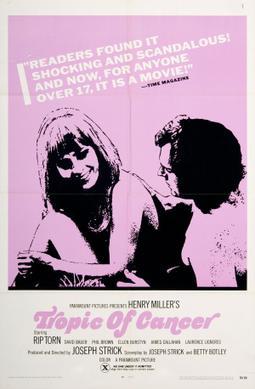
Tropic of Cancer
Entertainment
4 min read
Updated By: History Editorial Network (HEN)
Published:
Tropic of Cancer (1970) is a provocative and minimalist biographical drama directed by Joseph Strick, adapted from the controversial semi-autobiographical novel by Henry Miller. The film stars Rip Torn as Miller, portraying the struggling American writer as he drifts through the gritty streets of 1930s Paris—broke, sexually voracious, and intellectually defiant. Set against the backdrop of bohemian Europe, the story abandons conventional plot in favor of fragmented vignettes that mirror Miller's inner chaos and philosophical musings about art, sex, poverty, and the absurdities of polite society.
Strick embraces a cinéma vérité style, using handheld camerawork, raw lighting, and a naturalistic tone to reflect the novel’s unfiltered prose. Rip Torn delivers a performance that’s both crude and charismatic, fully inhabiting the role of a man who rejects societal norms in favor of artistic liberation and carnal indulgence. The film leans heavily into Miller’s eroticism, though its explicit content is more psychological than pornographic—provoking thought rather than titillation.
Upon release, Tropic of Cancer was met with censorship battles and divided critical reception. It was rated X in the United States and banned or restricted in several countries, reflecting the era’s discomfort with its explicit subject matter. Commercially, it struggled, failing to find a broad audience. But among cinephiles and literary circles, the film gained a degree of cult respect for its bold attempt to translate Miller’s notoriously unfilmable prose to the screen.
Though not a mainstream success, Tropic of Cancer stands as an audacious experiment—intellectual, raw, and unrepentantly personal. Its legacy lies in its refusal to compromise, offering an unvarnished portrait of a man—and a mindset—that challenged everything respectable.
Primary Reference
Tropic of Cancer (1970) - Overview

Explore the Life Moments of
 AI Twin