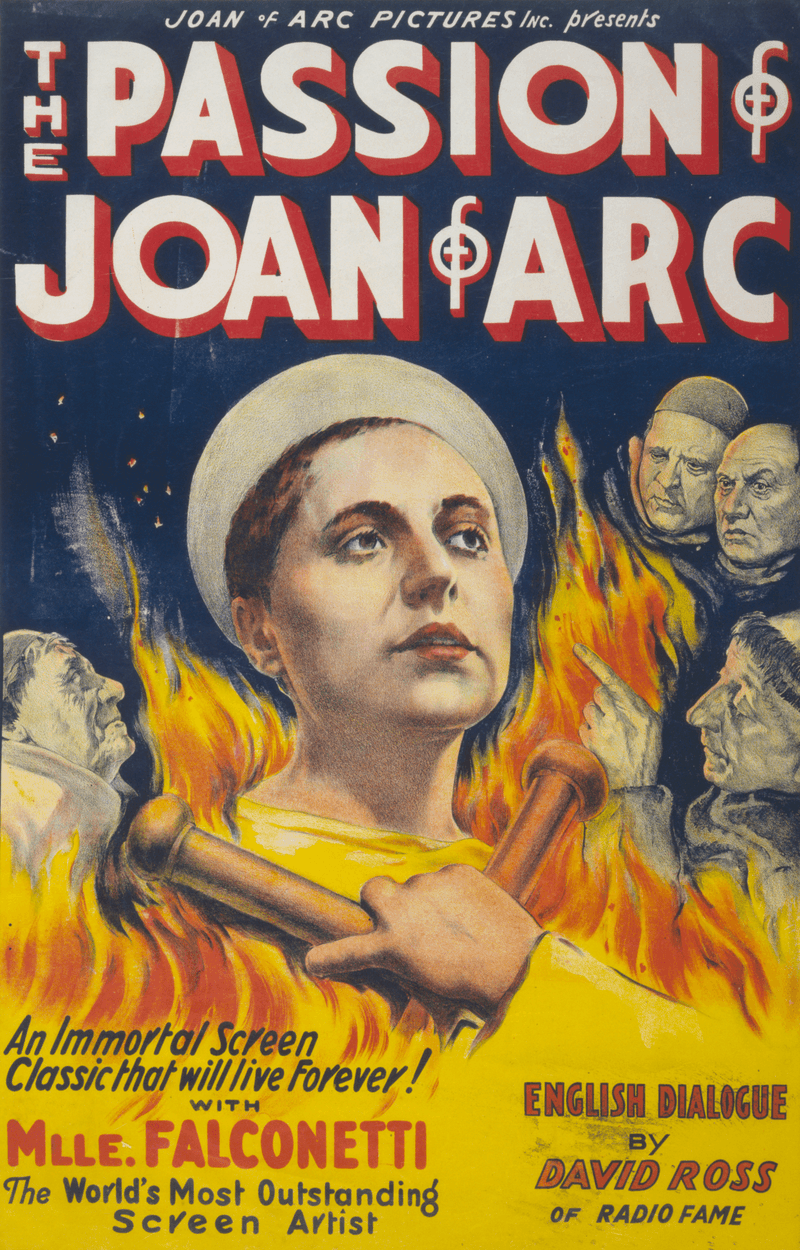
The Passion of Joan of Arc
Entertainment
4 min read
Updated By: History Editorial Network (HEN)
Published:
Updated:
The Passion of Joan of Arc (1928) is a silent biographical drama directed by Carl Theodor Dreyer, depicting the trial and execution of Joan of Arc with intense psychological focus and radical visual style. Renée Jeanne Falconetti stars in her only film role as Joan, delivering one of cinema’s most acclaimed performances—raw, anguished, and almost entirely conveyed through facial expressions and close-ups. The film is based on the actual transcripts of Joan’s 1431 trial for heresy, condensing the events into a single, relentless confrontation between the defiant young visionary and her cold, male-dominated inquisitors. Dreyer emphasizes Joan’s emotional and spiritual torment rather than large-scale historical events, stripping the film down to faces, expressions, and suffering.
Though met with controversy and censorship upon release, particularly in France, The Passion of Joan of Arc was critically recognized for its groundbreaking cinematography by Rudolph Maté, minimalist set design, and innovative editing. The original cut was believed lost for decades until a print was miraculously discovered in a Norwegian mental institution in 1981. Since then, the film has been universally hailed as a masterpiece. While it received no awards in its time—being released before the modern era of film honors—it now consistently ranks among the greatest films ever made. Falconetti’s portrayal is widely regarded as one of the most powerful performances in cinema history, and Dreyer’s direction as a landmark in visual storytelling. The Passion of Joan of Arc stands as a searing, spiritual, and formally revolutionary portrait of martyrdom, feminine strength, and faith under brutal persecution.
Primary Reference
The Criterion Collection: Passion of Joan of Arc, The

Explore the Life Moments of
 AI Twin