Gandhi (film)
Entertainment
4 min read
Updated By: History Editorial Network (HEN)
Published:
Updated:
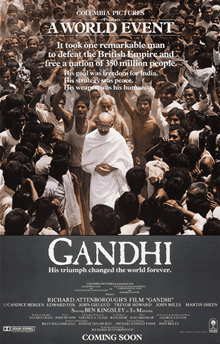
Gandhi (1982) is an epic historical biographical drama directed by Richard Attenborough, chronicling the life, philosophy, and enduring impact of Mohandas Karamchand Gandhi—the spiritual and political leader who led India’s nonviolent resistance movement against British colonial rule. Ben Kingsley delivers a masterful, career-defining performance as Gandhi, portraying his transformation from a young, British-educated lawyer in South Africa to a global icon of peaceful protest, civil disobedience, and human dignity. The film spans decades, capturing key moments like the Salt March, the partition of India, and Gandhi’s assassination in 1948.
Shot on a grand scale across India, with thousands of extras and meticulous period detail, the film blends intimate character moments with sweeping historical spectacle. Rather than glorify Gandhi as a saint, it presents him as a principled but fallible human being, unflinching in his beliefs yet constantly tested by political pressures, personal losses, and national upheaval. Kingsley’s physical transformation and emotional precision were widely praised, anchoring the film with quiet intensity.
Gandhi was both a critical and commercial triumph, grossing over $125 million worldwide on a $22 million budget. It dominated the 1983 Academy Awards, winning eight Oscars including Best Picture, Best Director, Best Actor, Best Cinematography, and Best Screenplay. It also received global recognition and helped cement Gandhi’s legacy for new generations worldwide.
The film’s legacy is profound—it remains one of the most influential biopics ever made, both as a work of cinema and as a cultural force. It set a benchmark for historical storytelling, and its themes of resistance through nonviolence remain relevant in modern struggles for justice and equality.

Explore the Life Moments of
 AI Twin