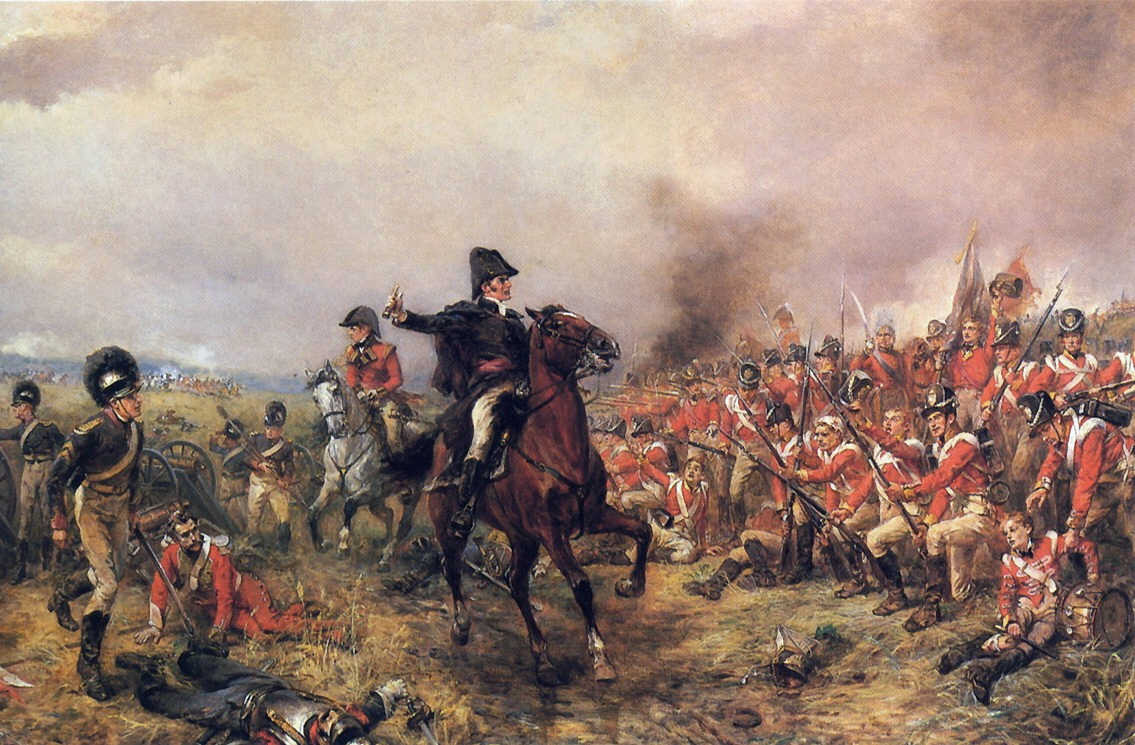
The Battle of Waterloo, where Napoleon Bonaparte was defeated by the Duke of Wellington and Gebhard Leberecht von Blücher.
Belgium
Political
4 min read
Updated By: History Editorial Network (HEN)
Published:
In 1815, Napoleon Bonaparte faced off against the Duke of Wellington and Gebhard Leberecht von Blücher in the Battle of Waterloo. The battle took place in present-day Belgium and marked the end of Napoleon's rule as the Emperor of France.
Napoleon had returned to power after his exile in Elba, seeking to regain control of France and expand his empire. The Duke of Wellington, leading the British and their allies, joined forces with von Blücher's Prussian troops to confront Napoleon's army.
The battle was fierce and lasted throughout the day, with both sides suffering heavy casualties. Despite Napoleon's tactical skills and experienced troops, the combined forces of Wellington and von Blücher ultimately proved to be too much for the French army. By the end of the day, Napoleon's forces were defeated, marking a decisive victory for the Allied forces.
The defeat at Waterloo spelled the end of Napoleon's reign and his ambitions of European domination. He would soon abdicate the throne for the final time and be exiled to the remote island of St. Helena, where he would spend the remainder of his days.
The Battle of Waterloo had far-reaching consequences, not only for Napoleon but also for Europe as a whole. It brought an end to years of conflict and uncertainty, paving the way for a new era of peace and stability on the continent.
The outcomes of the battle would shape the future of Europe for years to come, solidifying the power of the Allied forces and reshaping the political landscape of the region. Waterloo would be remembered as a turning point in history, marking the fall of one of the most iconic figures of the era.
#BattleOfWaterloo #NapoleonBonaparte #DukeOfWellington #VonBlücher #EndOfAnEra #EuropeanHistory

Explore the Life Moments of
 AI Twin