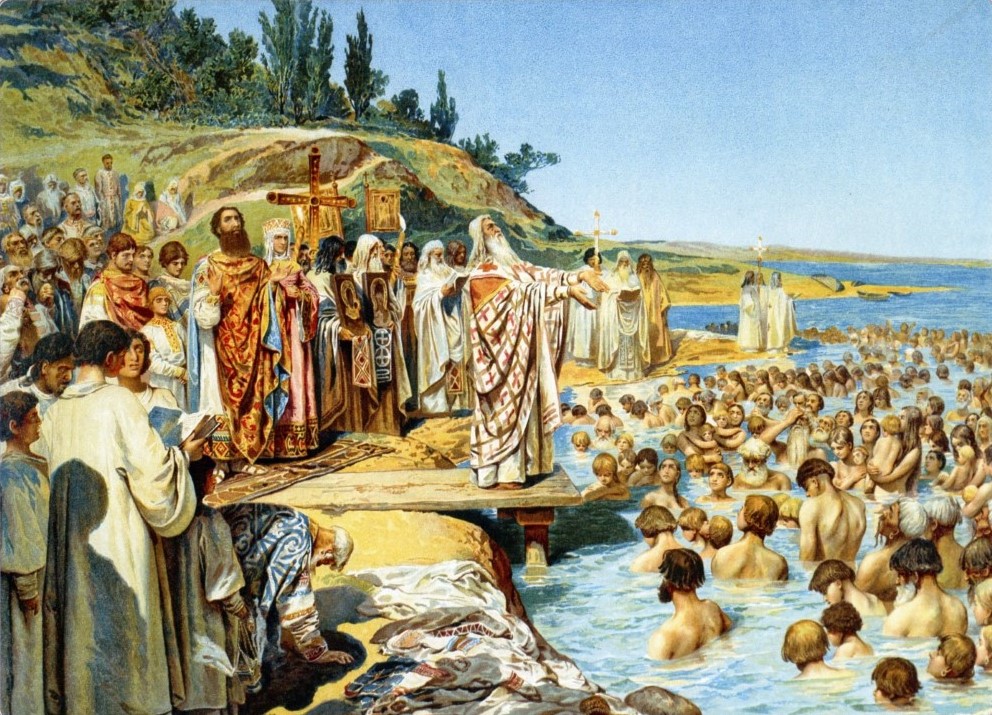
Adoption of Christianity in the Kievan Rus
Belarus

Religious
Cultural Exchange
4 min read
Updated By: History Editorial Network (HEN)
Published:
In the late 10th century, the adoption of Christianity in the Kievan Rus, including territories of present-day Belarus, marked a significant shift in religious practices. The decision to embrace Christianity was influenced by political, economic, and cultural factors. Prince Vladimir of Kiev played a pivotal role in this transformation, as he saw the potential benefits of aligning with the Byzantine Empire through the Christian faith.
The impact of adopting Christianity was profound as it not only introduced a new religion but also brought about social and cultural changes. Churches were built, and Christian rituals became an integral part of daily life. This helped in unifying the diverse population under a common belief system. The clergy played a crucial role in spreading the teachings of Christianity and establishing a strong religious presence in the region.
The acceptance of Christianity also had long-term consequences for the Kievan Rus, including present-day Belarus. It facilitated closer ties with European powers, leading to cultural exchanges and trade relationships. The adoption of the Cyrillic alphabet for written language further connected the region to the Eastern Christian world and preserved the Slavic cultural heritage.
Overall, the adoption of Christianity in the Kievan Rus, encompassing territories of present-day Belarus, was a transformative event that reshaped the religious and cultural landscape of the region. It laid the foundation for the development of a distinct Eastern Slavic Christian identity that continues to resonate in Belarusian history and society today.
#Christianization #KievanRus #CulturalExchange #ByzantineEmpire #Belarus #ReligiousTransformation
Primary Reference
Kurenets Guestbook Archive Part 3

Explore the Life Moments of
 AI Twin