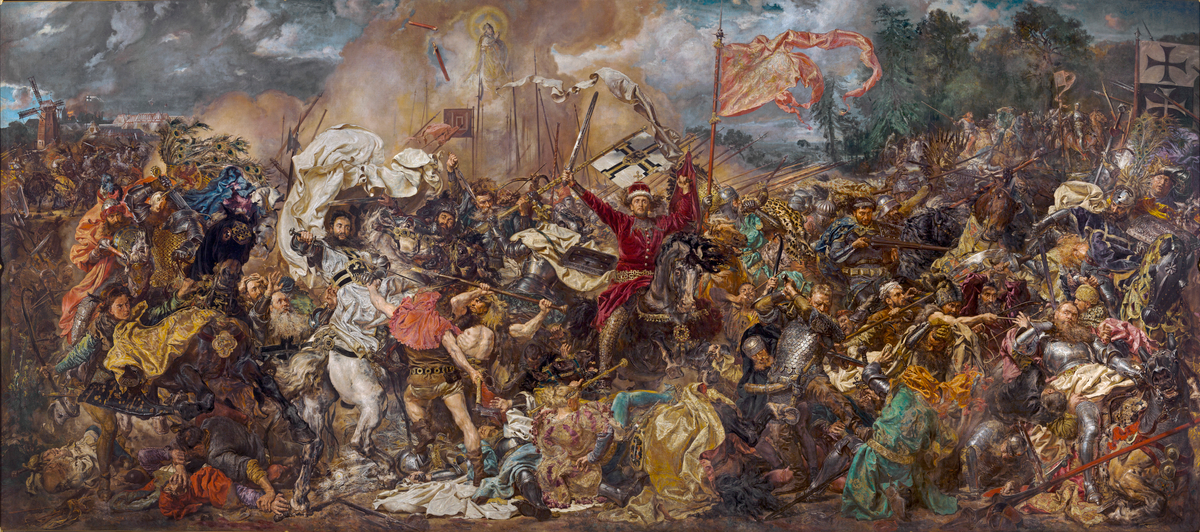
Battle of Grunwald shifts regional power with Lithuanian victory over Teutonic Order
Belarus

Political
4 min read
Updated By: History Editorial Network (HEN)
Published:
In the early 15th century, tensions between the Grand Duchy of Lithuania and the Teutonic Order had been escalating over territorial disputes in the Baltic region. The Teutonic Order, a powerful military order, aimed to expand its influence, while the Grand Duchy of Lithuania sought to protect its lands and maintain its autonomy.
The turning point came at the Battle of Grunwald when the forces of the Grand Duchy of Lithuania, led by Grand Duke Vytautas and King Jogaila of Poland, decisively defeated the Teutonic Order in a fierce confrontation. This victory marked a significant shift in power in the region and brought an end to the Teutonic Order's dominance.
The Battle of Grunwald had far-reaching consequences. It not only halted the Teutonic Order's expansionist ambitions but also weakened their hold over the Baltic territories. The Grand Duchy of Lithuania emerged as a major power in Eastern Europe, solidifying its position and paving the way for further territorial gains.
The defeat of the Teutonic Order at the Battle of Grunwald reshaped the political landscape of the Baltic region, leading to a period of relative stability and prosperity for the Grand Duchy of Lithuania. It also fostered closer ties between Lithuania and Poland, laying the foundation for the eventual union of the two countries.
Overall, the Battle of Grunwald was a defining moment in the history of Belarus, demonstrating the military prowess of the Grand Duchy of Lithuania and altering the balance of power in the region. The legacy of this event continues to be remembered and celebrated as a symbol of Belarusian resilience and determination.
#BattleOfGrunwald #GrandDuchyofLithuania #TeutonicOrder #PowerShift #BalticRegion
Primary Reference
Grand Duchy of Lithuania - Wikipedia

Explore the Life Moments of
 AI Twin