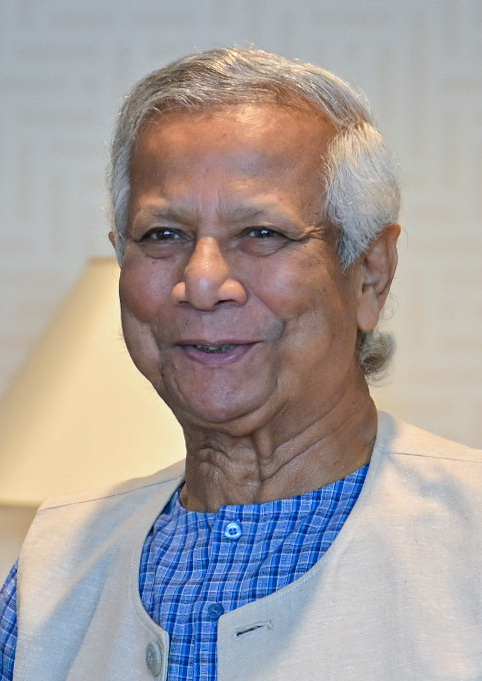
Nobel laureate Muhammad Yunus leads interim government to stabilize Bangladesh and promote economic reform.
Bangladesh
Political
Economic Downturn
6 min read
Updated By: History Editorial Network (HEN)
Published:
Updated:
Following Sheikh Hasina's resignation, Nobel laureate Muhammad Yunus took oath as Chief Adviser of Bangladesh's interim government. Hasina stepped down amid escalating political unrest and allegations of corruption against her administration. The appointment of Yunus, founder of Grameen Bank and pioneer of microfinance, was widely seen as an effort to stabilize the country and restore public confidence in its governance.
Yunus's role as Chief Adviser came at a critical juncture. He was entrusted with overseeing the transition to a new, democratically-elected government. His track record in championing economic development and poverty alleviation provided hope that he could bring a new sense of direction and integrity to the political landscape.
The interim government, led by Yunus, was tasked with ensuring the peaceful and transparent conduct of the upcoming general election. In this capacity, Yunus emphasized the importance of electoral reforms, enhancing the transparency of the election process, and fostering an environment where political opposition could operate without fear of retribution.
Yunus's influence extended beyond his position. His approach to governance, rooted in social entrepreneurship, fostered policies aimed at economic inclusivity. Notably, his involvement in the interim government ushered in discussions about reducing income disparity and promoting sustainable development.
Economically, Yunus's emphasis on microfinance and small-scale enterprise hoped to rejuvenate local economies. Statistics indicated that microfinance programs under Grameen Bank positively impacted millions of Bangladeshis, with notable reductions in poverty rates and increases in household incomes.
International observers noted that Yunus’s leadership brought a semblance of stability to Bangladesh. Reports from global financial institutions suggested cautious optimism about Bangladesh’s economic prospects under Yunus’s interim government.
The social landscape also witnessed shifts as Yunus's principles of self-sufficiency and grassroots development became more mainstream among policy discussions.
Yunus’s tenure as Chief Adviser concluded after overseeing the national elections, regarded as one of the most transparent in Bangladesh's history, with a voter turnout surpassing 70%.
His influence, albeit brief, left an enduring mark on the country's democratic and economic institutions, reinforcing the importance of integrity and inclusive growth in governance.
#Bangladesh #PoliticalTransition #MuhammadYunus #GrameenBank #Democracy #EconomicDevelopment #Microfinance #ElectoralReform #MoofLife
Primary Reference
Muhammad Yunus takes oath as head of Bangladesh's interim ...

Explore the Life Moments of
 AI Twin