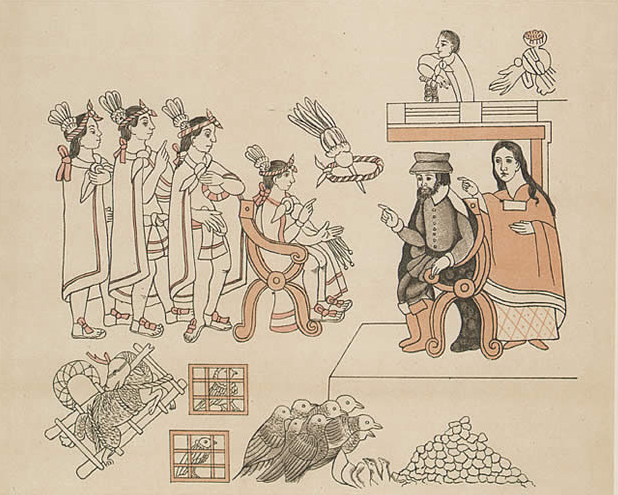
Cortés enters Tenochtitlán and meets Moctezuma II.
Tenochtitlan, Lake Texcoco, Valley of Mexico, Mexico
9 min read
Updated By: History Editorial Network (HEN)
Published:
Updated:
On 08/11/1519, Spanish conquistador Hernán Cortés and his expedition entered the Aztec capital of Tenochtitlan, where they were formally received by the Mexica ruler Moctezuma II. The encounter between the Spanish forces and the emperor of the Aztec Empire became one of the most famous meetings in the history of the Americas. It occurred on one of the great causeways connecting the island city to the mainland across Lake Texcoco, a setting that astonished many of the Europeans arriving in central Mexico for the first time.
Tenochtitlan, founded in 1325 by the Mexica people, was among the largest and most sophisticated urban centers in the world during the early 16th century. Built on islands in Lake Texcoco in the Valley of Mexico, the city featured canals, bridges, marketplaces, aqueducts, temples, and extensive causeways linking it to surrounding settlements. Spanish chroniclers accompanying Cortés compared the city’s appearance to major European urban centers and described its scale and organization with surprise and admiration.
The meeting followed months of political maneuvering and military alliances formed after Cortés landed on the Gulf Coast of Mexico earlier in 1519. As the Spanish advanced inland, they forged alliances with Indigenous enemies of the Aztec Empire, particularly the Tlaxcalans. These alliances provided thousands of Indigenous warriors and significantly strengthened the Spanish campaign. Moctezuma II, aware of the advancing foreign force and the unrest among tributary states, attempted to manage the situation through diplomacy and gifts while monitoring the newcomers’ intentions.
According to Spanish and Indigenous accounts recorded after the conquest, Moctezuma personally greeted Cortés during the Spaniards’ entrance into the city. Chroniclers described elaborate ceremonies, exchanges of gifts, and formal speeches during the encounter. Moctezuma reportedly presented valuable objects including gold ornaments, jewelry, and ceremonial garments, while Cortés and his men marveled at the wealth and urban complexity of the capital.
The exact nature of the relationship between Moctezuma and Cortés remains debated among historians. Earlier colonial narratives often portrayed Moctezuma as believing Cortés to be linked to the returning god Quetzalcoatl, but modern scholarship generally questions or rejects this interpretation as an oversimplification shaped by later Spanish accounts. Historians instead emphasize the political uncertainty of the moment, as Moctezuma attempted to respond strategically to an unfamiliar military and diplomatic threat.
Initially, the Spaniards were housed within the city as honored guests. However, tensions rapidly escalated over the following months. Cortés eventually placed Moctezuma under effective house arrest within his own capital, seeking to control the Aztec state through the emperor. Violence erupted in 1520 after Spanish forces massacred participants during a religious festival at the Templo Mayor while Cortés was temporarily absent from the city.
The uprising that followed forced the Spaniards and their allies to flee Tenochtitlan during the event later known as La Noche Triste in June 1520. Moctezuma died during the turmoil under circumstances that remain disputed in historical sources. Cortés later returned with a larger coalition of Indigenous allies and laid siege to the city. Tenochtitlan ultimately fell on 13/08/1521 after months of warfare, famine, and disease devastated the population.
The meeting between Cortés and Moctezuma II has remained a defining moment in world history because it symbolized the first direct confrontation between the Spanish imperial expansion and the most powerful state in Mesoamerica. The encounter initiated a chain of events that reshaped the political, cultural, and demographic future of the Americas.
Historical Significance
The entry of Cortés into Tenochtitlan and his meeting with Moctezuma II marked the beginning of the final phase of the Spanish conquest of the Aztec Empire. The encounter brought together two vastly different political worlds and led to events that transformed central Mexico through conquest, colonization, and cultural change.
Primary Reference
Hernán Cortés

Explore the Life Moments of
 AI Twin