Key Pipeline for Caspian to Mediterranean Oil Transport Begins Operations
Azerbaijan
Global Trade
Economic Development
4 min read
Updated By: History Editorial Network (HEN)
Published:
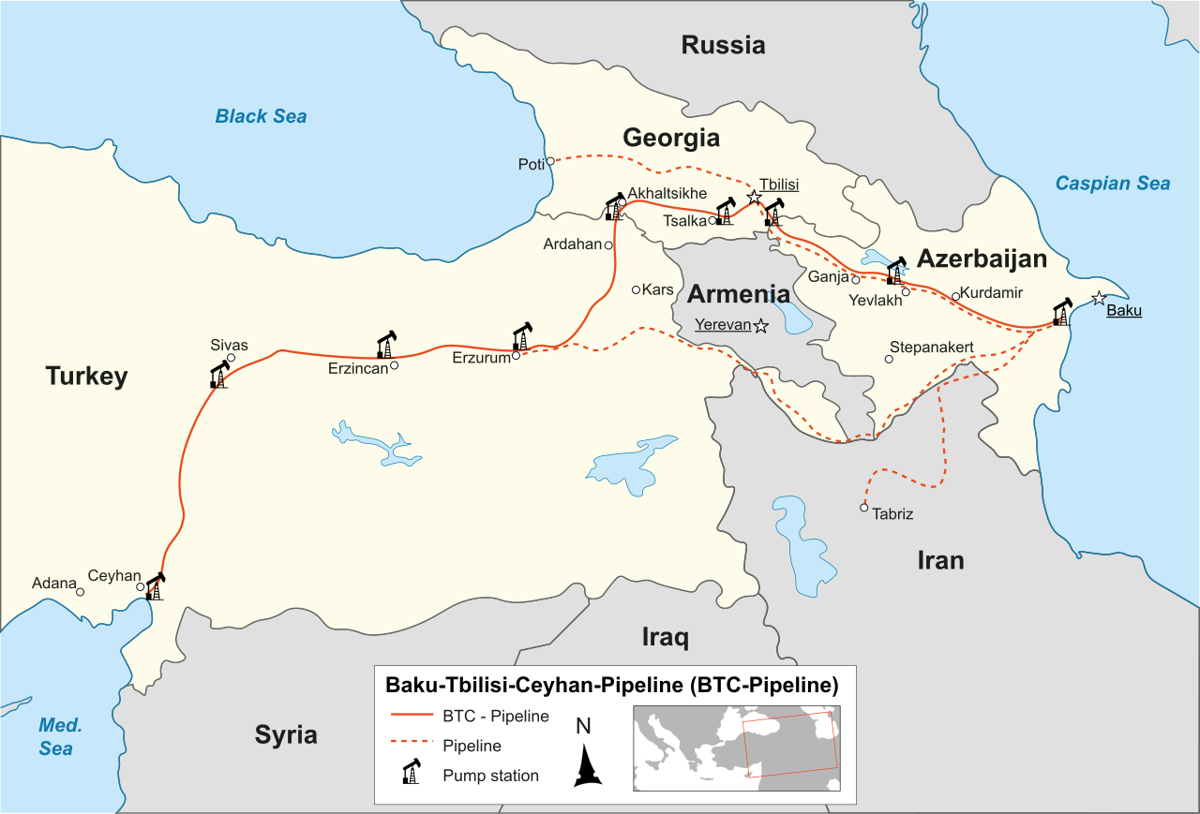
The Baku-Tbilisi-Ceyhan (BTC) pipeline, running from the Caspian Sea to the Mediterranean, was established to transport oil efficiently. The decision to construct the pipeline stemmed from the region's significant oil reserves and the need for a safe and reliable route to deliver oil to global markets while avoiding politically unstable regions.
Upon becoming operational, the BTC pipeline had a substantial impact on the energy landscape. It provided a crucial alternative to traditional oil transportation routes, offering a secure path for oil exports from the Caspian Sea to the Mediterranean. The pipeline significantly reduced transportation costs and risks associated with transporting oil through other routes, benefiting both oil-producing countries in the region and global energy consumers.
The operationalization of the BTC pipeline marked a milestone in the energy sector by diversifying oil transportation options and strengthening energy security. It enhanced economic growth in the region by facilitating the export of oil and attracting investments in infrastructure and related industries. Moreover, the pipeline fostered cooperation among the countries involved in its construction and operation, contributing to regional stability and diplomatic relations.
The successful completion and operation of the BTC pipeline underscored the importance of international collaboration in addressing energy challenges and ensuring the efficient transportation of natural resources. The pipeline continues to play a crucial role in the energy sector, serving as a model for future infrastructure projects aimed at enhancing energy security and fostering economic development.
#BTCpipeline #CaspianSea #Mediterranean #energysecurity #oiltransportation #Azerbaijan

Explore the Life Moments of
 AI Twin