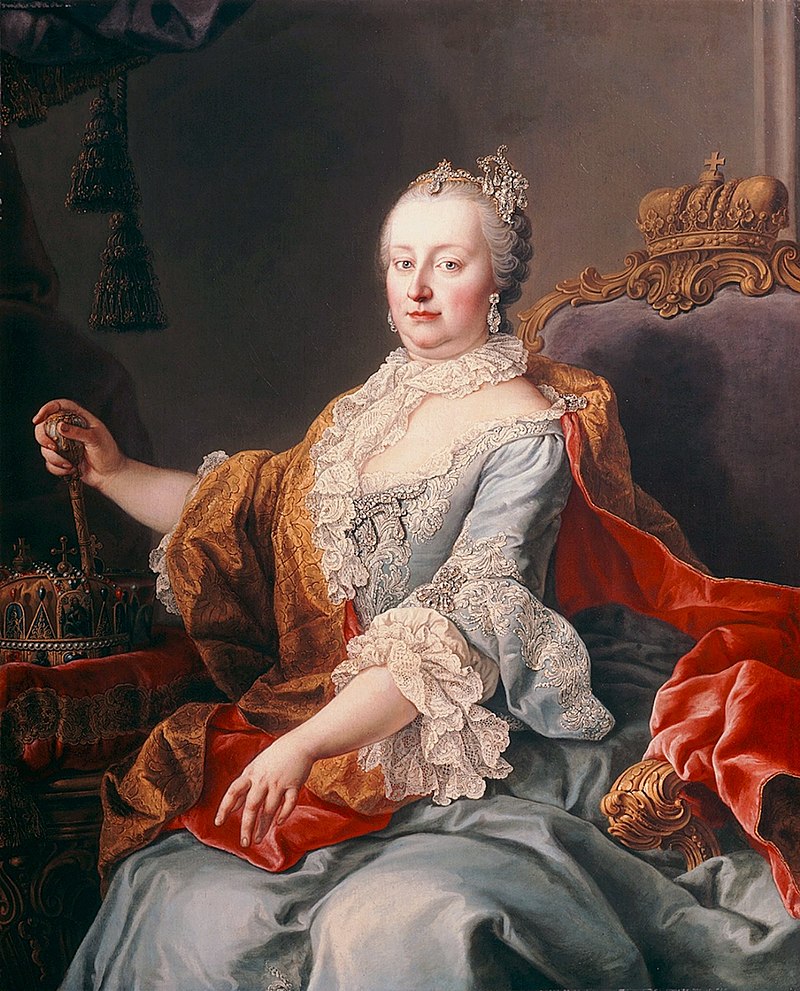
Maria Theresa's ascension to power as ruler of the Austrian Empire suffices.
Austria

Political
3 min read
Updated By: History Editorial Network (HEN)
Published:
Maria Theresa, daughter of Emperor Charles VI, inherited the Habsburg territories upon her father's death. This succession went against the Salic Law, which prevented women from inheriting the throne. The surrounding powers saw an opportunity to seize Habsburg lands, sparking the War of the Austrian Succession.
Maria Theresa faced challenges from France, Prussia, Bavaria, and Saxony. Despite initial setbacks, she displayed resilience and determination in defending her claim. Through diplomatic maneuvers and alliances, she managed to secure her position as ruler of Austria. Her reign marked the beginning of significant reforms and modernization within the empire.
Maria Theresa's rule was characterized by centralization of government, military reforms, and social policies aimed at improving the lives of her subjects. She also focused on strengthening the economy and promoting education. Her reign had a lasting impact on the future of Austria and laid the groundwork for the reforms of her son, Joseph II.
Her ascension to power was a turning point in Austrian history, solidifying the Habsburg dynasty's control and setting the stage for developments in the following decades. Maria Theresa's legacy as a strong and influential ruler endures to this day.
#MariaTheresa #AustrianEmpire #HabsburgDynasty #WarofAustrianSuccession
Primary Reference
Maria Theresa - Wikipedia

Explore the Life Moments of
 AI Twin