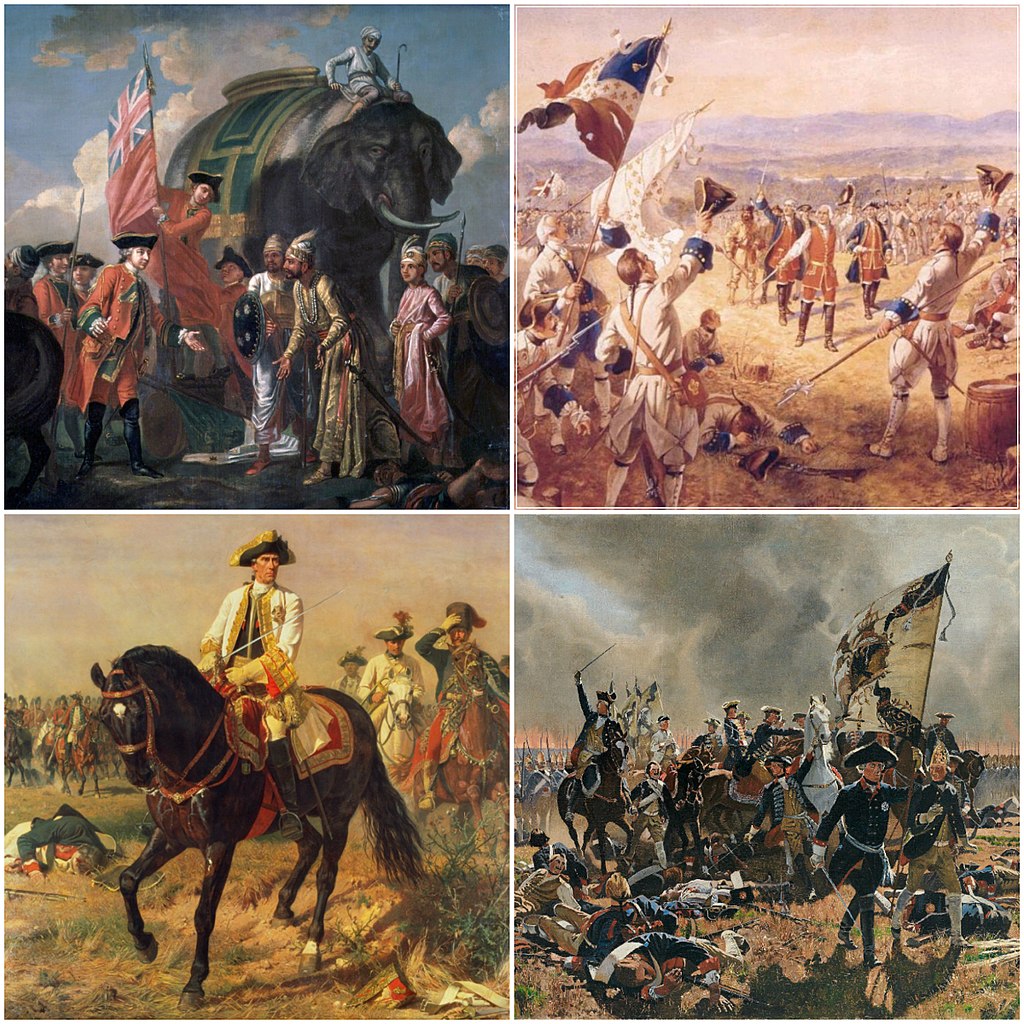
Seven Years' War starts, impacting multiple countries and leading to significant conflicts and consequences.
Austria

Political
Global Trade
10 min read
Updated By: History Editorial Network (HEN)
Published:
On August 29, 1756, the Seven Years' War officially began, a conflict that would engulf much of Europe and extend to other parts of the world, profoundly shaping global geopolitics. The war was one of the most significant conflicts of the 18th century, involving nearly all the great powers of Europe and having far-reaching consequences, particularly for Austria and its role in the conflict.
Background: The Road to War
The Seven Years' War was rooted in ongoing tensions between European powers, especially the rivalry between Austria and Prussia in Central Europe, and the broader colonial and naval conflicts between Britain and France. The War of the Austrian Succession (1740-1748) had left many issues unresolved, particularly the status of Silesia, which had been seized by Prussia from Austria. Empress Maria Theresa of Austria was determined to reclaim Silesia and restore Habsburg prestige.
In preparation for this, Austria formed a new alliance system, most notably the Diplomatic Revolution of 1756, which saw Austria, traditionally an ally of Britain, align itself with France, while Prussia allied with Britain. This reshuffling of alliances set the stage for the broader conflict.
Austria's Role and the Outbreak of War
The war began on August 29, 1756, when Frederick the Great of Prussia, anticipating an Austrian attack, launched a preemptive strike against Saxony, a close ally of Austria. This bold move by Frederick marked the beginning of the Seven Years' War. Austria, under Maria Theresa, immediately mobilized its forces to resist Prussian aggression and to recover Silesia.
Austria, supported by its new allies France, Russia, and Sweden, sought to encircle and defeat Prussia, thereby restoring its lost territories. The conflict quickly expanded as other European powers were drawn into the fray, with battles occurring not just in Europe, but also in North America, India, Africa, and the Caribbean, making it one of the first truly global conflicts.
Key Conflicts Involving Austria
Austria played a central role in many of the war's most significant battles and campaigns:
Battle of Lobositz (1756): One of the early confrontations between Austrian and Prussian forces, this battle was inconclusive but demonstrated the determination of both sides.
Battle of Kolín (1757): Austria secured a crucial victory here, halting Frederick the Great's advance into Bohemia and boosting Austrian morale.
Battle of Leuthen (1757): Despite Austria’s success at Kolín, Frederick the Great achieved a decisive victory at Leuthen, reasserting Prussian dominance in Silesia. This battle was a severe blow to Austrian hopes of reclaiming the region.
Siege of Prague (1757): Austria's capital, Vienna, faced threats during the war, with Prussian forces nearly reaching the city. However, the Austrians managed to defend their territory and prevent a total collapse.
Despite these efforts, Austria struggled to decisively defeat Prussia. The conflict drained Austria’s resources and caused widespread devastation, but Maria Theresa remained steadfast in her determination to continue the fight.
Consequences and the End of the War
The Seven Years' War ended in 1763 with the Treaty of Hubertusburg and the Treaty of Paris. For Austria, the results were mixed. While the Habsburg Monarchy survived the war and Maria Theresa maintained her rule, Austria failed to recover Silesia, which remained under Prussian control. This solidified Prussia’s status as a major European power and a rival to Austria in the German-speaking world.
The war also had profound consequences for Austria's allies. France, heavily indebted from the war, lost many of its colonial possessions to Britain, leading to a decline in French influence. Russia’s involvement shifted the balance of power in Eastern Europe, while Britain emerged as the dominant colonial power.
Legacy
The Seven Years' War significantly reshaped the map of Europe and set the stage for future conflicts. For Austria, it underscored the limits of its power in the face of a rising Prussia and marked the beginning of a new era in European politics. The conflict also had lasting effects on Austria’s military and economic structure, leading to reforms in the Habsburg Empire.
Moreover, the war’s global reach and its impact on colonial empires influenced the course of history far beyond Europe, contributing to the eventual American and French revolutions.
#SevenYearsWar #AustrianHistory #EuropeanHistory #FrederickTheGreat #MariaTheresa #18thCenturyWars #GlobalConflict #MomentsOf
Primary Reference
Seven Years' War | Key Facts | Britannica

Explore the Life Moments of
 AI Twin