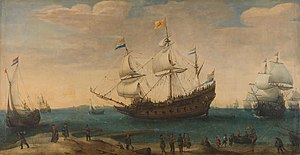
VOC ship 'Mauritius' naming the Ashburton River.
Australia
Exploration of Australia
Colonial Naming
4 min read
Updated By: History Editorial Network (HEN)
Published:
Updated:
In July 1618, the VOC ship 'Mauritius' made a significant landing near North West Cape, Australia. This event marked the discovery and exploration of new territories by the Dutch East India Company. During their expedition, they named a river 'Willem's River', which was later renamed as the Ashburton River.
The arrival of the VOC ship 'Mauritius' near North West Cape led to the exploration and mapping of the surrounding areas, expanding the knowledge of the Dutch about the Australian continent. This event played a crucial role in increasing European understanding of the geography and resources of Australia, paving the way for future expeditions and colonization efforts.
The naming of 'Willem's River' by the crew of the 'Mauritius' was a testament to the Dutch influence in the region during the 17th century. The discovery of the river added to the growing body of geographical knowledge about Australia and contributed to the rich history of exploration and navigation in the area.
The renaming of 'Willem's River' to the Ashburton River reflects the changing dynamics of colonial influences in the region over time. The renaming of geographical features often symbolizes shifts in power, culture, and historical narratives.
The event of the VOC ship 'Mauritius' landing near North West Cape and naming 'Willem's River', later renamed Ashburton River, stands as a significant milestone in the exploration and mapping of Australia by European powers. It highlights the early interactions between European explorers and the indigenous lands they encountered, shaping the history and naming conventions of the region.
#VOCshipMauritius #ExplorationofAustralia #AshburtonRiver #DutchExploration #ColonialNaming
Explore the Life Moments of
 AI Twin