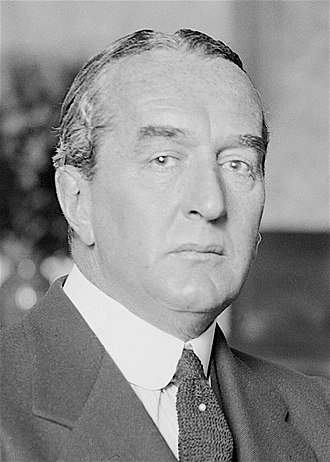
Stanley Bruce is Elected the 8th Prime Minister
Australia
Political
Economic Downturn
4 min read
Updated By: History Editorial Network (HEN)
Published:
Updated:
Stanley Bruce assumed office as the 8th Prime Minister of Australia following the resignation of Prime Minister Billy Hughes. Bruce had a background in economics and had held various ministerial positions before his appointment as Prime Minister. He was known for his business acumen and leadership skills, which he brought to the forefront during his time in office.
During his tenure, Bruce focused on economic policies to address the challenges faced by Australia post-World War I. He implemented measures to promote industrialization, increase agricultural production, and stimulate trade. Bruce also worked towards strengthening Australia's ties with other nations and played a key role in the formation of the British Commonwealth of Nations.
One of the significant impacts of Stanley Bruce's leadership was the establishment of the New Guard, a right-wing political movement that emerged in response to growing political and social unrest. The New Guard supported Bruce's initiatives and advocated for conservative policies. Bruce's government faced opposition from the Labor Party and trade unions, leading to a period of political turmoil.
Despite the challenges, Bruce's government introduced reforms in areas such as social welfare, defense, and immigration. His focus on economic recovery and nation-building initiatives laid the groundwork for Australia's future growth and development.
Bruce's term as Prime Minister came to an end after he lost his seat in the 1929 election. However, his contributions to Australian politics and his efforts to navigate the country through a period of significant change are remembered to this day.
#StanleyBruce #PrimeMinister #Australia #EconomicReform #NewGuard #NationBuilding

Explore the Life Moments of
 AI Twin