Discovery of Torres Strait Route
Australia
Exploration
Maritime
3 min read
Updated By: History Editorial Network (HEN)
Published:
Updated:
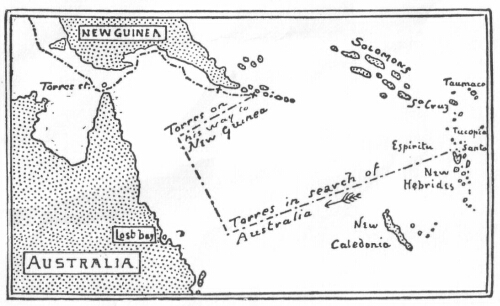
In the early 1600s, Spanish explorer Luís Vaz de Torres embarked on a voyage through uncharted waters, seeking a new route from the Pacific to the Indian Ocean. Sailing on behalf of the Spanish Crown, Torres navigated through a perilous strait separating the vast land masses of Australia and New Guinea. This waterway later became known as the Torres Strait in his honor.
Torres' journey had significant implications for European understanding of the geography of the region. His navigation through the strait helped debunk the long-held myth of a vast southern continent, revealing instead the separate land masses of Australia and New Guinea. This newfound knowledge had far-reaching consequences for future exploration and colonization efforts in the area.
The discovery of the Torres Strait was a crucial development in the history of maritime exploration, opening up a new passage for trade and travel between the Pacific and Indian Oceans. It also paved the way for further European expeditions to the continent of Australia and its surrounding islands.
To this day, the Torres Strait remains an important maritime thoroughfare, facilitating shipping and transportation routes between Australia and Southeast Asia. Torres' daring voyage through these treacherous waters stands as a testament to the courage and ingenuity of early explorers who braved the unknown in search of new horizons.
#Exploration #MaritimeHistory #Discovery #Australia #Navigation

Explore the Life Moments of
 AI Twin