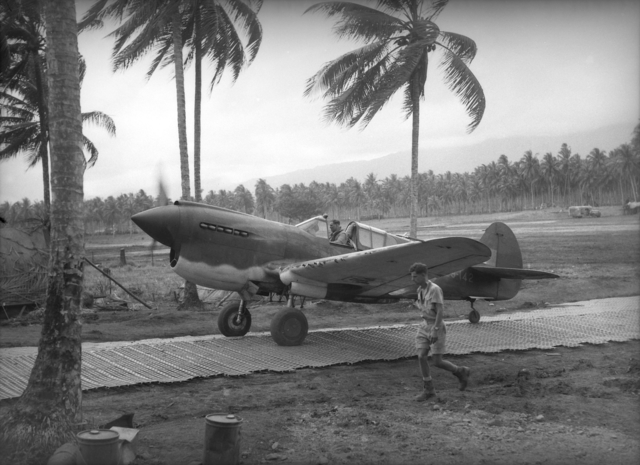
Battle of Milne Bay: First defeat of Japanese Army.
Australia
Military
4 min read
Updated By: History Editorial Network (HEN)
Published:
Updated:
In the midst of World War II, the Battle of Milne Bay marked a significant turning point in the Pacific theater. The Imperial Japanese Army had been targeting strategic locations to expand their territory, and Milne Bay in Papua New Guinea was one of their objectives. The Japanese aimed to secure the bay for a potential invasion of mainland Australia.
Australian forces, primarily consisting of the 7th Infantry Division and local militia units, were tasked with defending Milne Bay. Despite being outnumbered and facing fierce Japanese assaults, the Australians, with air support from the United States, utilized their knowledge of the terrain to their advantage. They strategically positioned themselves, making use of the dense jungle and mangrove swamps to launch surprise attacks on the enemy.
In a relentless and intense battle that lasted for days, the Australian troops inflicted heavy casualties on the Japanese forces. The Australians' resilience and tactical prowess eventually forced the Japanese to retreat, marking the first time the Imperial Japanese Army had been defeated on land during the Pacific War. This victory not only halted the Japanese advance towards Australia but also boosted the morale of the Allied forces in the region.
The Battle of Milne Bay highlighted the significance of effective coordination between ground troops and air support. It also showcased the determination and bravery of the Australian soldiers who stood their ground against a formidable enemy. The outcome of this battle demonstrated that the Japanese forces were not invincible and gave a much-needed boost to the Allied war effort in the Pacific.
#BattleOfMilneBay #AustralianForces #JapaneseDefeat #WWII #PacificTheater

Explore the Life Moments of
 AI Twin