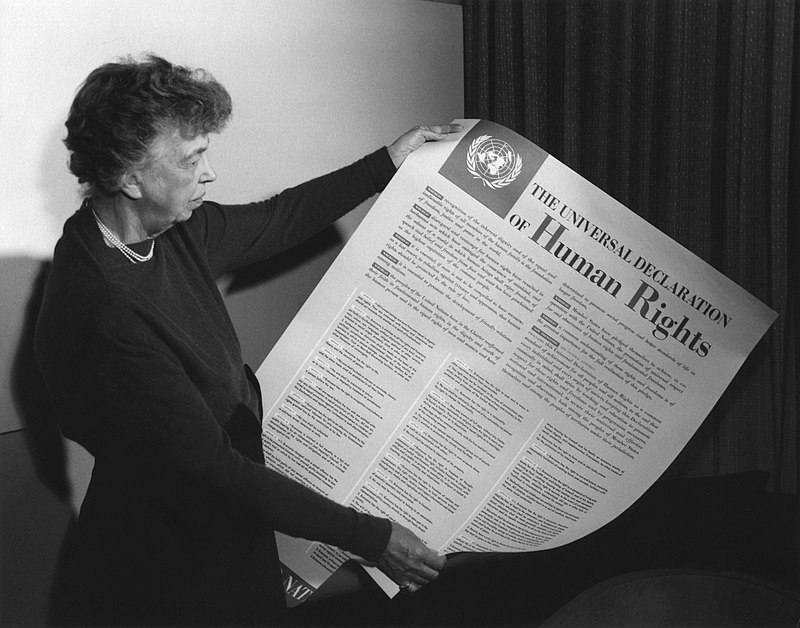
Australia Signs Universal Declaration of Human Rights
Australia
Global Trade
Political
4 min read
Updated By: History Editorial Network (HEN)
Published:
Updated:
In 1948, Australia officially pledged its support to the Universal Declaration of Human Rights (UDHR), an international document that outlines fundamental human rights for all individuals. This decision marked a significant step towards upholding human dignity, equality, and freedom in Australia and beyond.
Australia's commitment to the UDHR reflected its dedication to promoting and protecting human rights globally. By becoming a signatory, Australia affirmed its recognition of essential rights such as the right to life, liberty, and security of person, as well as the right to a fair trial and freedom of expression.
The impact of Australia's decision to support the UDHR was profound. It demonstrated the country's alignment with international efforts to ensure that every individual is entitled to basic human rights, regardless of race, gender, religion, or social status. By endorsing the UDHR, Australia acknowledged its responsibility to uphold these rights within its own borders and to advocate for them on the world stage.
Australia's commitment to the UDHR continues to influence its domestic policies and foreign relations. The principles outlined in the declaration serve as a guiding framework for addressing issues such as discrimination, social inequality, and access to justice within Australia. By upholding the values of the UDHR, Australia underscores its commitment to creating a more just and equitable society for all its citizens.
The decision of Australia to become a signatory to the UDHR underscores the country's dedication to promoting human rights and fundamental freedoms. It signals Australia's support for the values of equality, justice, and dignity for all individuals, and reaffirms its role as a key advocate for human rights on the international stage.
#Australia #HumanRights #UDHR #Equality #Justice

Explore the Life Moments of
 AI Twin