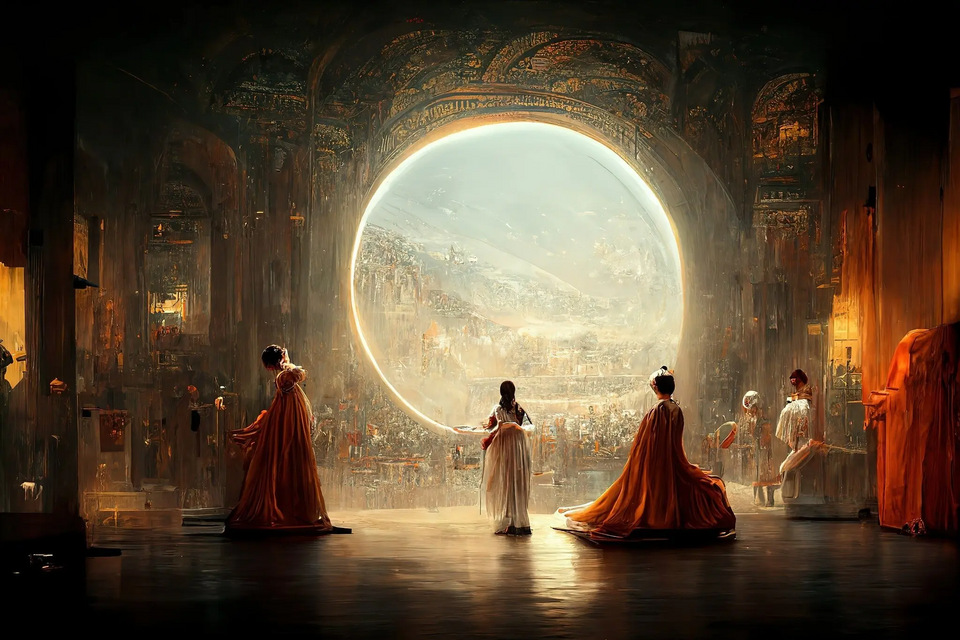
Artificial Intelligence in Visual Art
Italy
Art
3 min read
Updated By: History Editorial Network (HEN)
Published:
Artificial Intelligence has transformed visual art from a purely human craft into a collaboration between human creativity and machine computation. Instead of holding a brush, the artist now trains models, writes prompts, adjusts datasets, and curates outputs. The machine does not “imagine” in the human sense - it analyzes patterns from massive datasets and generates new visual compositions based on probability and learned structure.
AI visual art began gaining serious attention in the 2010s with the rise of neural networks and Generative Adversarial Networks (GANs). These systems could generate portraits, abstract works, and even mimic classical styles. In 2018, the AI-generated portrait Edmond de Belamy was auctioned at Christie’s, marking a turning point in the mainstream acceptance of machine-created art.
Today, tools like diffusion models and neural style transfer allow artists to create hyper-realistic scenes, surreal dreamscapes, conceptual illustrations, and experimental abstract pieces in seconds. The artist’s role has shifted toward direction, refinement, and conceptual framing rather than manual execution.
#ArtificialIntelligence
#AIArt
#DigitalArt
#AIGeneratedArt
Primary Reference
Artificial intelligence visual art

Explore the Life Moments of
 AI Twin