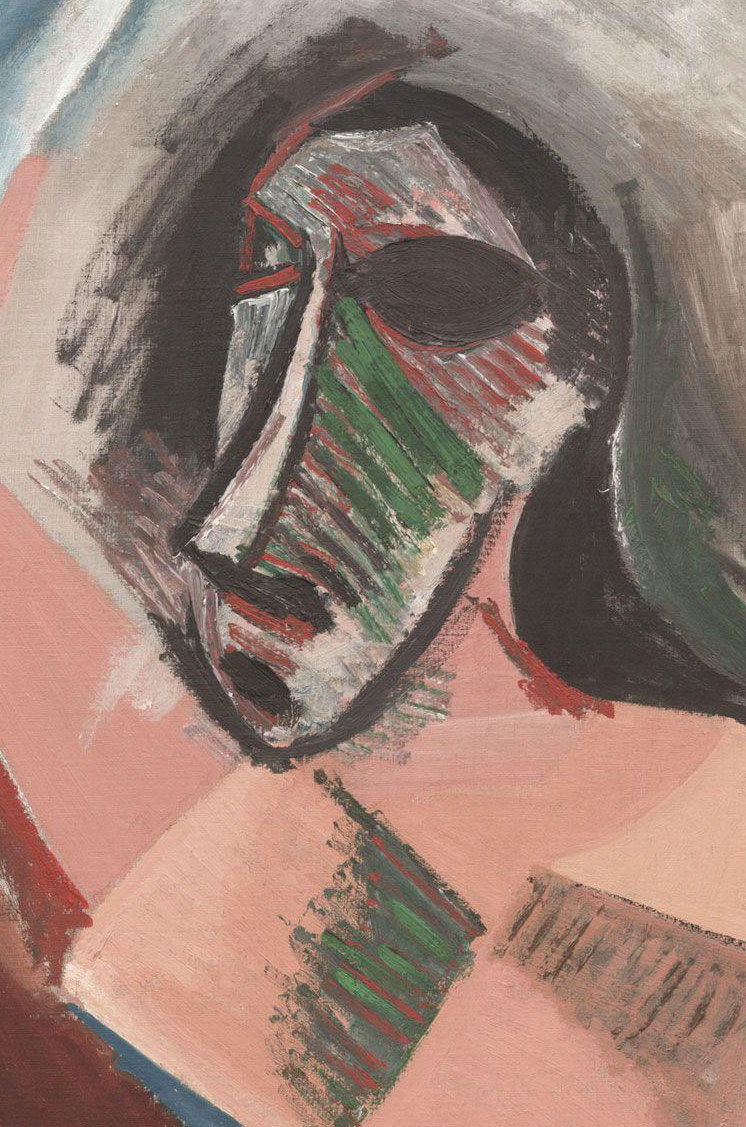
Analysis of Les Demoiselles d'Avignon
New York City, United States
Art
Painting
Cubism
4 min read
Updated By: History Editorial Network (HEN)
Published:
Updated:
Pablo Picasso's 'Les Demoiselles d'Avignon' is a pivotal artwork in the development of modern art, particularly within the Proto-Cubism movement. Created by Picasso, this painting is characterized by its radical departure from traditional representation and perspective. The composition features five female figures, depicted in a fragmented and abstract manner, which challenges the conventional portrayal of the female form in art. The use of sharp angles and bold, flat planes of color reflects influences from African art and Iberian sculpture, marking a significant shift in Picasso's style and approach to form and space. This work is often seen as a precursor to Cubism, a movement that Picasso would further develop alongside Georges Braque, emphasizing the breakdown of objects into geometric shapes and the exploration of multiple viewpoints within a single composition.
The impact of 'Les Demoiselles d'Avignon' extends beyond its immediate visual language; it represents a critical moment in the evolution of 20th-century art. The painting's boldness and innovation prompted discussions about the nature of representation and the role of the artist in society. It challenged viewers to reconsider their perceptions of beauty and the human figure, leading to a broader acceptance of abstraction in art. The work has been analyzed extensively, with art historians noting its influence on subsequent movements, including Surrealism and Expressionism. Today, 'Les Demoiselles d'Avignon' is regarded as one of the most important works in the history of art, housed in the Museum of Modern Art in New York, where it continues to inspire and provoke thought among audiences and artists alike.
#mooflife
#MomentOfLife
#PabloPicasso
#LesDemoisellesD'avignon
#Proto-cubism
#ModernArt
#ArtHistory
Primary Reference

Explore the Life Moments of
 AI Twin