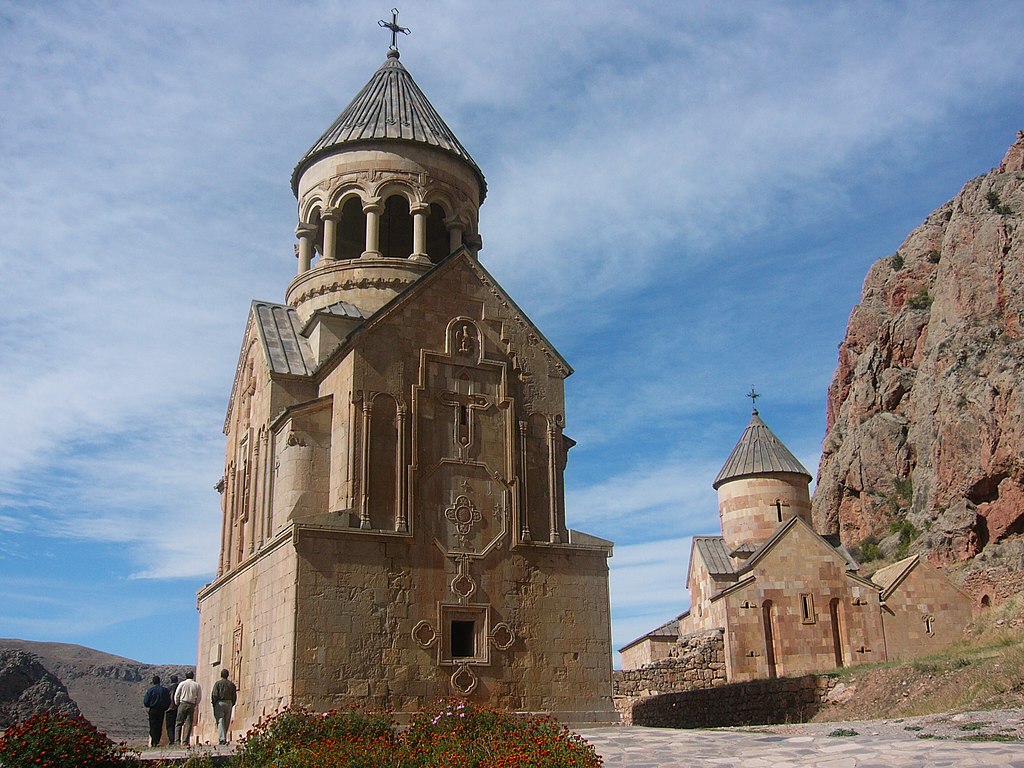
Construction of iconic Noravank Monastery showcases stunning medieval Armenian architecture and craftsmanship.
Armenia
Cultural Heritage
Architecture
3 min read
Updated By: History Editorial Network (HEN)
Published:
In 1205, construction began on the Noravank Monastery in Armenia. The monastery was commissioned by Bishop Hovhannes, a prominent figure in the region, as a memorial to his family. The site was chosen for its strategic location in a narrow gorge, surrounded by stunning red cliffs.
Noravank Monastery became a center of religious and cultural significance, attracting pilgrims and scholars from far and wide. The complex included churches, chapels, and other structures, adorned with intricate carvings and ornate decorations typical of Armenian medieval architecture.
The completion of the Noravank Monastery marked a milestone in the architectural history of Armenia, showcasing the innovative construction techniques and artistic achievements of the time. The monastery also played a role in the spiritual and intellectual life of the region, fostering the exchange of ideas and the preservation of religious traditions.
Today, Noravank Monastery stands as a testament to the rich cultural heritage of Armenia, drawing visitors from around the world to marvel at its beauty and historical significance.
#NoravankMonastery #ArmenianArchitecture #CulturalHeritage
Primary Reference
Noravank Monastery

Explore the Life Moments of
 AI Twin