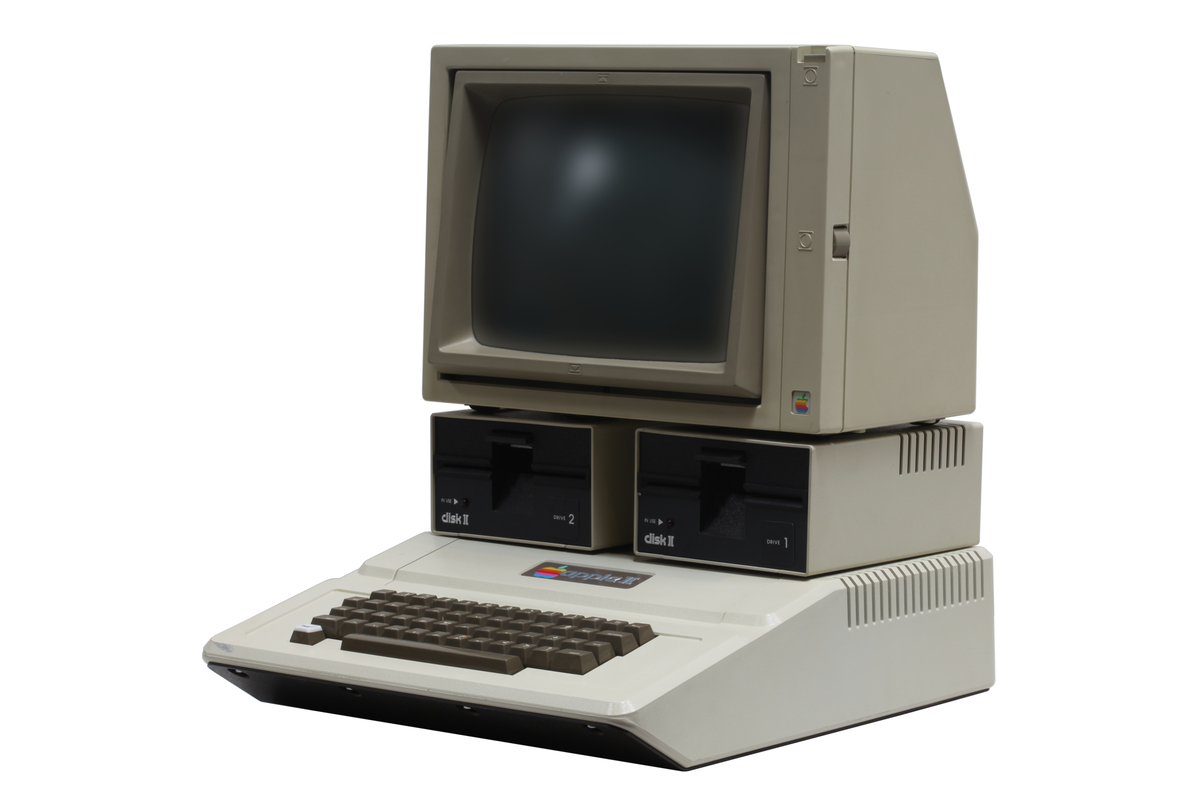
Introduction of the Apple II
San Francisco, California, United States
Computers
Technology History
Consumer Electronics
4 min read
Updated By: History Editorial Network (HEN)
Published:
Updated:
On 16/04/1977, Apple Computer introduced the Apple II at the first West Coast Computer Faire in San Francisco, marking the company’s transition from the hobbyist oriented Apple I to a fully assembled consumer ready personal computer. Designed by Steve Wozniak and marketed under the leadership of Steve Jobs, the Apple II featured a molded plastic case, built in keyboard, and ready to run software stored in ROM. The system was presented as a complete computer that users could operate immediately after powering on, without requiring assembly.
The Apple II was one of three systems often referred to as the “1977 Trinity,” alongside the Commodore PET 2001 and the Tandy TRS 80, which together helped establish the early home computer market. Apple announced that the Apple II included Integer BASIC in ROM, allowing users to begin programming immediately. The computer also supported color graphics, which distinguished it from many competing systems that displayed only monochrome output. Internally, the Apple II provided eight expansion slots, enabling users and developers to add peripherals such as disk controllers, memory expansions, and interface cards.
Although introduced in April 1977, Apple began shipping the Apple II on 10/06/1977. The initial configuration included 4 KB of RAM and was priced at $1,298. The system’s combination of expandability, color graphics, and consumer friendly design helped establish Apple’s early presence in the personal computer industry and laid the foundation for the Apple II family that followed in subsequent years.
Apple II micro computer, 1977
#mooflife
#MomentOfLife
#AppleIi
#PersonalComputer
#SteveWozniak
#OpenArchitecture
#FloppyDiskDrive
Primary Reference
45 Years Ago, Apple Kickstarted the Personal Computer Industry

Explore the Life Moments of
 AI Twin