How to Train Your Dragon
Entertainment
6 min read
Updated By: History Editorial Network (HEN)
Published:
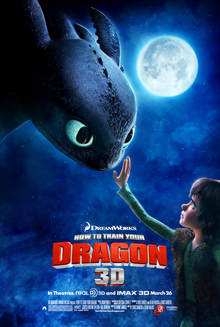
How to Train Your Dragon (2010) is a critically acclaimed computer-animated action-fantasy film produced by DreamWorks Animation and directed by Chris Sanders and Dean DeBlois. Adapted loosely from the book series by Cressida Cowell, the film follows Hiccup, a scrawny and inventive teenage Viking who lives in the dragon-plagued village of Berk. Determined to prove himself, he injures a rare and feared Night Fury dragon, only to find he can’t bring himself to kill it. Instead, he befriends and names the dragon Toothless, discovering that dragons are not the enemy they’ve been taught to be. Their secret bond challenges generations of fear and hatred and eventually reshapes the future of their people.
Visually, the film was a turning point for DreamWorks. It employed lush, cinematic animation enhanced by the guidance of legendary cinematographer Roger Deakins, who consulted on lighting and framing. The flying sequences, in particular, were revolutionary—combining sweeping camera movements with immersive 3D rendering to create a sense of speed and freedom rarely seen in animation. The score by John Powell became an instant classic, blending Celtic motifs and orchestral power, and earning an Academy Award nomination for Best Original Score.
At the box office, How to Train Your Dragon was a strong performer. With a budget of around $165 million, it grossed over $494 million worldwide, becoming one of DreamWorks’ top-grossing films. It was especially successful in home video and merchandising, helping launch an extensive franchise that would grow even more lucrative with time.
Critically, the film was a major success, holding a 99% rating on Rotten Tomatoes and a Metacritic score of 75. Reviewers praised the emotional depth, character development, animation quality, and thematic maturity. Unlike many children’s films of the time, How to Train Your Dragon explored the cost of violence, the power of empathy, and the strength found in vulnerability. It was widely considered DreamWorks’ finest work to date, often compared favorably to Pixar’s strongest efforts.
Awards-wise, the film received two Academy Award nominations—for Best Animated Feature and Best Original Score—though it lost both to Toy Story 3. However, it won ten Annie Awards, including Best Animated Feature, Best Direction, and Best Music. It also received a BAFTA nomination and numerous critics’ circle accolades.
The legacy of How to Train Your Dragon is immense. It launched one of the most beloved animated trilogies of all time, spawning two sequels (both critically acclaimed), multiple TV series, video games, books, and a massive fanbase. More importantly, it marked a tonal shift in family animation—proving that films could be exciting, beautiful, funny, and emotionally profound all at once. For DreamWorks, it wasn’t just a hit—it was a statement of artistic evolution.

Explore the Life Moments of
 AI Twin