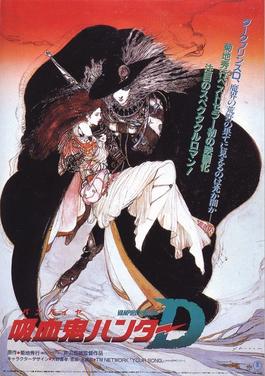
Vampire Hunter D
Entertainment
6 min read
Updated By: History Editorial Network (HEN)
Published:
Updated:
Vampire Hunter D (1985) is a seminal Japanese animated horror-action film directed by Toyoo Ashida and based on the 1983 light novel by Hideyuki Kikuchi, with illustrations by Yoshitaka Amano. Set in a distant post-apocalyptic future where vampires and monsters rule over scattered human settlements, the film follows D, a mysterious and stoic half-human, half-vampire "dhampir" who is hired by a young girl named Doris Lang to protect her from the ancient and powerful vampire Count Magnus Lee. With his supernatural powers, cyberpunk-meets-gothic aesthetic, and an intelligent talking parasite living in his left hand, D must battle mutants, beasts, and vampire nobility to fulfill his mission and confront his own dual nature.
The film is notable for blending gothic horror, science fiction, and spaghetti western influences in a way that was unprecedented in anime at the time. Visually, it reflects the stylized art of Yoshitaka Amano through highly detailed character designs, eerie backdrops, and a mix of traditional cel animation and dark, atmospheric lighting. While constrained by a modest budget and the limitations of early OVA production, the film manages to capture a distinct mood—slow, ominous, and haunting. The music, composed by Tetsuya Komuro, combines synthesizer-heavy 1980s horror tones with orchestral cues that heighten the dread and romance.
Initially released as a direct-to-video OVA (Original Video Animation), Vampire Hunter D gained massive popularity on home video markets, particularly in the United States, where it became one of the first anime films to achieve cult status in the West. Though its Japanese box office was minimal due to its OVA nature, it helped establish a strong international following for mature, R-rated anime. It played a critical role in introducing Western audiences to anime outside of family-friendly genres.
Critically, the film received mixed to positive reviews upon release—praised for its imaginative world and art style, but criticized for pacing issues and uneven animation. Over time, however, its reputation grew, especially among horror, sci-fi, and anime fans. It’s now regarded as a pioneering work in adult anime and a major influence on later gothic-fantasy titles.
While Vampire Hunter D did not win major awards at the time of release, its legacy is significant. It helped lay the groundwork for later anime horror and fantasy hybrids and paved the way for the broader international acceptance of darker, more violent animated films. In 2000, it received a critically acclaimed follow-up, Vampire Hunter D: Bloodlust, which featured significantly improved animation and a more refined adaptation of Kikuchi’s novels. Together, these films have cemented the franchise’s place as a foundational entry in anime history, particularly within the horror and dark fantasy genres.
Primary Reference
Vampire Hunter D (OVA)

Explore the Life Moments of
 AI Twin