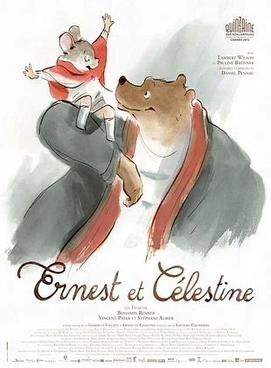
Ernest & Celestine
Entertainment
6 min read
Updated By: History Editorial Network (HEN)
Published:
Updated:
Ernest & Celestine (Ernest et Célestine, 2012) is a French-Belgian animated film directed by Stéphane Aubier, Vincent Patar, and Benjamin Renner, based on the beloved children’s books by Gabrielle Vincent. The film tells the story of an unlikely friendship between Ernest, a large, gruff bear who lives on the fringes of society as a street musician, and Celestine, a clever and rebellious orphaned mouse who resists the rigid rules of the rodent world. In a society where bears and mice are expected to fear and hate each other, their bond is seen as taboo. When the two are forced into hiding after a series of petty crimes and misunderstandings, they form a makeshift family, challenging societal norms and prejudices along the way.
The animation is rendered in a soft, hand-painted watercolor style, closely mirroring the original illustrations by Vincent. The result is a visually charming and emotionally warm aesthetic that feels like a moving storybook. The minimalist, expressive character design and fluid animation create a tone that is gentle and childlike, yet layered with subtext about conformity, fear, and acceptance. The musical score, composed by Vincent Courtois, adds a whimsical and emotive undertone that enhances the film’s fairy tale quality.
At the box office, Ernest & Celestine was a modest commercial success, grossing approximately $8.1 million worldwide. While it had a limited theatrical release in the U.S., it performed well in Europe, especially in France and Belgium, where the source material is well known. It gained a wider audience through home media and streaming platforms, and its universal themes and artful presentation helped it transcend language and cultural barriers.
Critically, the film was widely acclaimed. It holds a 98% rating on Rotten Tomatoes and a Metacritic score of 86, with reviewers praising its emotional depth, storytelling elegance, and stunning visual style. Critics appreciated its quiet intelligence, strong anti-authoritarian message, and its refusal to talk down to children—presenting a story about social expectations, compassion, and individuality in a way that’s accessible yet profound.
Ernest & Celestine was nominated for Best Animated Feature at the 86th Academy Awards (2014), standing alongside heavyweight contenders like Frozen and The Wind Rises. It won Best Animated Feature at the César Awards, and also took home several honors at international festivals, including awards at the Toronto International Film Festival and the Annecy International Animated Film Festival.
The legacy of Ernest & Celestine is rooted in its gentle subversion of the “us vs. them” narrative. It became a new classic in European animation, standing out with its handmade aesthetic and emotional sincerity. A sequel (Ernest & Celestine: A Trip to Gibberitia) was released in 2022, continuing the duo’s adventures and reaffirming the enduring appeal of this quietly radical tale about friendship across boundaries.
Primary Reference
Ernest & Celestine

Explore the Life Moments of
 AI Twin