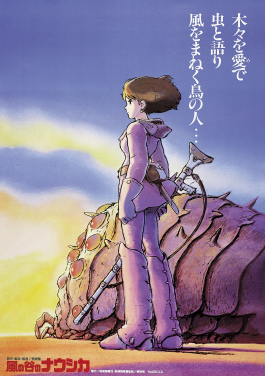
Nausicaä of the Valley of the Wind
Entertainment
7 min read
Updated By: History Editorial Network (HEN)
Published:
Updated:
Nausicaä of the Valley of the Wind (1984) is a landmark Japanese animated science fantasy film written and directed by Hayao Miyazaki in what would become the spiritual beginning of Studio Ghibli. Based on Miyazaki’s own manga of the same name, the story is set in a post-apocalyptic world where ecological collapse has given rise to toxic jungles and giant mutant insects. The titular heroine, Princess Nausicaä, rules a peaceful valley and seeks to understand, rather than destroy, the vast and deadly Toxic Jungle. As neighboring militarized states wage war over ancient biological weapons, Nausicaä must fight to prevent humanity from repeating its past mistakes—by restoring harmony between man and nature.
The film is celebrated for its richly imagined world, ecological depth, and strong, empathetic protagonist. Nausicaä is a rare character in animated cinema—both warrior and pacifist, scientist and spiritual figure. The film’s narrative weaves anti-war messaging with environmentalism and complex moral ambiguity, traits that would become staples of Miyazaki’s later work. The animation, produced by Topcraft (which later evolved into Studio Ghibli), is hand-drawn and painterly, featuring sweeping landscapes, intricate insect designs, and vibrant mechanical elements. Joe Hisaishi’s score—his first collaboration with Miyazaki—adds a haunting, atmospheric layer to the film’s tone.
Though Studio Ghibli had not yet been formally established, the success of Nausicaä directly led to its founding in 1985. At the box office, the film earned approximately ¥1.48 billion (~$11 million USD) in Japan—a strong performance for a non-franchise animated feature at the time. It was eventually released internationally, though a heavily butchered and poorly dubbed version titled Warriors of the Wind was infamously criticized by Miyazaki, prompting Ghibli to insist on strict no-edit clauses for future Western releases.
Critically, Nausicaä of the Valley of the Wind has been universally acclaimed. It holds a 91% rating on Rotten Tomatoes and is widely regarded as one of the most influential anime films of all time. Reviewers praised its narrative ambition, world-building, and progressive messaging. Over time, it has come to be seen not only as Miyazaki’s first masterpiece but also as a foundational film in global animation history.
While it didn’t receive major international awards at the time of release, the film won the Ōfuji Noburō Award at the Mainichi Film Awards in Japan. Its influence can be seen in countless works—from Princess Mononoke to Avatar to Dune-like sci-fi epics—and it remains a benchmark for intelligent, environmentally conscious storytelling in animation.
The legacy of Nausicaä is vast. It launched Studio Ghibli in spirit and substance. It also established Hayao Miyazaki as a global auteur whose films could appeal to children and adults alike, with moral complexity and artistic daring. Today, Nausicaä of the Valley of the Wind is not just a classic—it’s the root system from which the entire Ghibli ethos grew.
Primary Reference
Kaze No Tani No Naushika

Explore the Life Moments of
 AI Twin