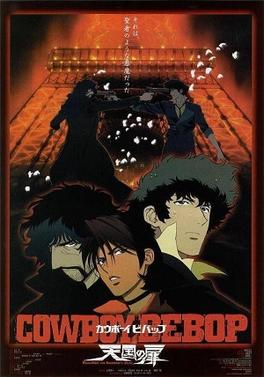
Cowboy Bebop: The Movie
Entertainment
6 min read
Updated By: History Editorial Network (HEN)
Published:
Updated:
Cowboy Bebop: The Movie (2001), also known as Cowboy Bebop: Knockin’ on Heaven’s Door, is a feature-length anime film directed by Shinichirō Watanabe and based on the cult classic 1998 TV series Cowboy Bebop. Set between episodes 22 and 23 of the original show, the film reunites the Bebop crew—Spike Spiegel, Jet Black, Faye Valentine, Edward, and Ein—as they track down a mysterious terrorist who plans to unleash a deadly pathogen on Mars just days before Halloween. The bounty is massive, but so is the risk, and the crew is once again drawn into a conflict far bigger than themselves. What unfolds is a high-stakes sci-fi noir that fuses action, philosophy, and jazz-infused melancholy.
Visually, the film expands on the show's iconic style with cinematic animation quality—more fluid action, detailed backgrounds, and a richer color palette. The animation, produced by Sunrise, Bones, and Bandai Visual, elevates the space-western aesthetic with gritty cityscapes inspired by New York and North African architecture. The action choreography—particularly the hand-to-hand fight sequences—is among the best ever seen in traditional 2D animation. Yoko Kanno returns to compose a hauntingly diverse score with her band The Seatbelts, mixing jazz, rock, blues, and Arabic motifs to match the film’s shifting moods and global tone.
The film had a production budget of approximately $3 million USD and grossed around $3.3 million worldwide, with limited theatrical releases in Japan, the U.S., and select international markets. Though it didn’t break box office records, it was considered a financial success given its niche audience and helped expand the Cowboy Bebop fanbase globally, especially in the West where the series had achieved cult status via Cartoon Network’s Adult Swim.
Critically, Cowboy Bebop: The Movie was well-received, praised for its animation, music, and ability to preserve the tone and depth of the series while standing alone as a complete narrative. It holds a 77% approval rating on Rotten Tomatoes, with critics noting its philosophical undercurrent and smooth blend of action and mood. Some felt it was a bit slow compared to the pace of the series, but others appreciated its atmospheric storytelling and Spike’s introspective arc.
The legacy of the film lies in its reaffirmation of Cowboy Bebop as a high watermark of anime as serious adult storytelling. It showcased how an anime film could maintain the integrity of its source while appealing to broader international audiences. Its success helped cement Cowboy Bebop as a global cultural phenomenon and remains a touchstone for fans of anime, neo-noir, and genre fusion.
Primary Reference
Cowboy Bebop (2003)

Explore the Life Moments of
 AI Twin