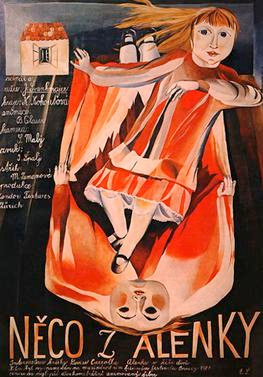
Alice
Entertainment
5 min read
Updated By: History Editorial Network (HEN)
Published:
Alice (1988) is a surrealist dark fantasy directed by Jan Švankmajer—his first feature film—produced through a Czechoslovakia–Switzerland–UK–Germany collaboration. Based loosely on Lewis Carroll’s Alice’s Adventures in Wonderland, the film follows a young girl named Alice as she chases a taxidermied White Rabbit through a cabinet door into a bizarre dream realm. Combining live-action with stop-motion animation of puppets, dead animals, and household objects, Švankmajer creates an amoral, fever-dream version of Wonderland where nothing behaves logically, and every transformation feels eerily tactile.
Visually, Alice is disturbing yet magnetic: the film uses close-up editing, stop-motion puppetry, and minimal sets to disorient viewers. Everyday objects seem alive in uncanny ways—sock puppets sprout dentures, playing cards animate into grotesquely literal figures—and the film constantly reminds us we are watching artifice. Its design is minimalist with haunting detail, bringing Carroll’s absurdity into unsettling territory. An unnerving score underscores its noir-tinged atmosphere without offering comfort.
Made on an art-house budget typical of Eastern European productions of the time, the film premiered at Cannes and celebrated success on the festival circuit. Though its box office returns were limited, its legacy grew steadily through home video release and cult reverence among cinephiles and animators.
Critically, the film was praised for stripping Wonderland of its whimsy and recasting it as an amoral dreamscape. It holds strong approval from modern critics and is regarded as a masterpiece of stop-motion artistry. Even reviewers who find it unsettling admit its visual inventiveness and dream-logic power set it apart from other adaptations.
Alice won the Feature Film Award at the 1989 Annecy International Animated Film Festival, confirming Švankmajer’s status as a visionary in adult animation. Its influence is evident in later experimental works that foreground materiality and surreal narrative flow.
The legacy of Alice lies in its bold reimagining of animation’s potential—eschewing fantasy for dreamlike disquiet, rejecting illusion for craft, and proving that animation can explore the unconscious with brutal honesty. Its tactile horror and visual poetry ensure it remains a seminal work in avant-garde animation.
Primary Reference
Něco z Alenky (1988)

Explore the Life Moments of
 AI Twin