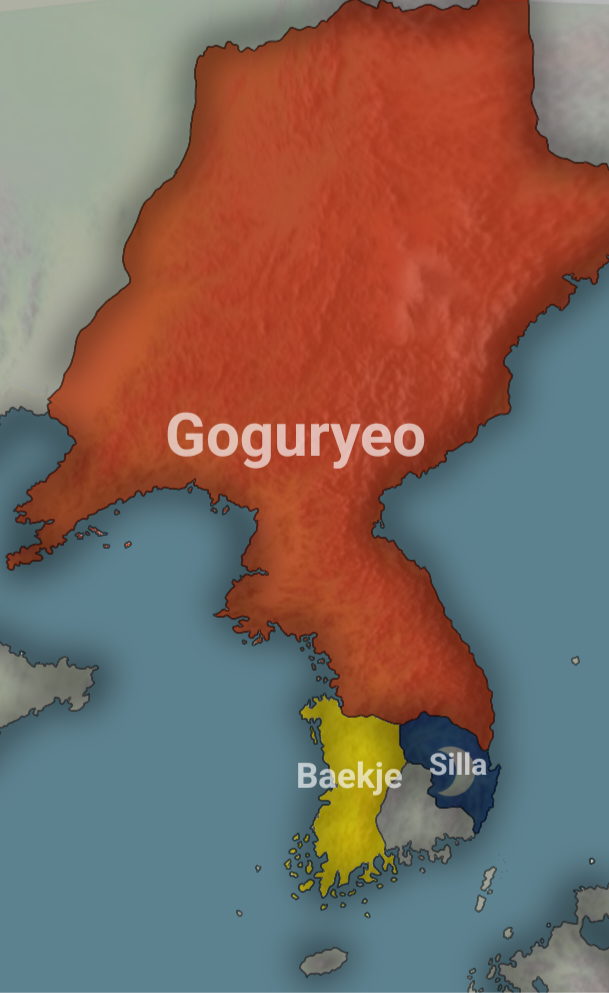
Unification of Later Three Kingdoms
Korean Peninsula (Songak/Kaesong and surrounding regions)
Historical Events
Korean History
Medieval History
4 min read
Updated By: History Editorial Network (HEN)
Published:
Updated:
The unification of the Later Three Kingdoms in 936 CE marked the consolidation of power on the Korean Peninsula under the Goryeo Dynasty, founded by Wang Geon, later known as King Taejo. This event brought an end to a period of internal conflict that had followed the decline of Unified Silla, during which multiple rival states competed for control.
The Later Three Kingdoms period consisted of three main powers: Later Baekje, Later Goguryeo (also known as Taebong, later renamed Majin), and the remnants of Silla. Wang Geon, originally a naval commander under Gung Ye of Later Goguryeo, rose to prominence and eventually deposed Gung Ye in 918, establishing the Goryeo Dynasty with its capital at Songak (modern-day Kaesong). Over the following years, Wang Geon pursued a strategy that combined military campaigns with diplomatic alliances to expand his influence.
A key development occurred in 935 when the last king of Silla, King Gyeongsun, formally surrendered to Goryeo. This peaceful submission allowed Wang Geon to incorporate Silla’s territories without prolonged conflict. The final stage of unification came in 936, when Goryeo forces defeated Later Baekje, the remaining rival state, bringing the entire peninsula under Goryeo’s control.
Following unification, Wang Geon implemented policies aimed at stabilizing the newly unified state. He integrated former elites from rival kingdoms into the Goryeo administration and promoted a system of governance that balanced regional interests. These measures helped maintain internal stability after decades of warfare.
The unification of 936 established Goryeo as the dominant political authority on the Korean Peninsula, laying the foundation for a dynasty that would rule until 1392.
Why This Moment Matters
The unification created a centralized state after prolonged division and enabled the development of political and cultural systems that influenced Korea for centuries.
#mooflife
#MomentOfLife
#Goryeo
#LaterThreeKingdoms
#KoreanHistory
#WangKŏn
#Unification
Primary Reference
Three Kingdoms of Korea

Explore the Life Moments of
 AI Twin