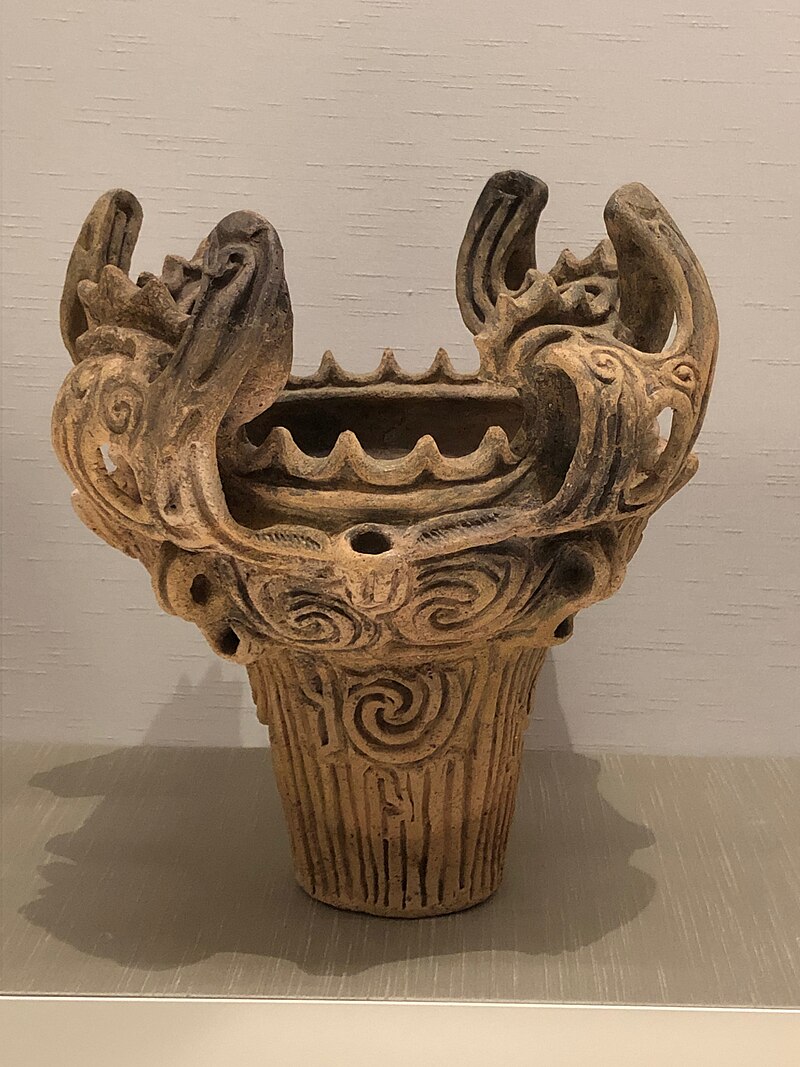
Middle Jōmon Vase from Ancient Japan
Japanese Archipelago
Art
Archaeology
4 min read
Updated By: History Editorial Network (HEN)
Published:
Updated:
Around 3000 BCE, during the Middle Jōmon period (c. 2500–1500 BCE), pottery in ancient Japan reached a highly developed and visually complex stage. This period is recognized for the production of ceramics that featured intricate and often dramatic designs, reflecting both technical skill and evolving cultural expression among Jōmon communities.
Middle Jōmon pottery differed significantly from earlier, simpler vessels. Craftsmen created pots with elaborate rims, flame-like projections, and detailed surface decorations formed by twisting, pressing, and layering clay. These designs are often referred to as “flame-style” pottery, particularly in regions such as central Honshu. While earlier pottery emphasized functionality, many Middle Jōmon pieces show a level of artistic complexity that suggests additional cultural or symbolic roles.
Archaeological sites from this period indicate relatively stable settlements with pit dwellings, suggesting that communities had access to consistent food sources such as nuts, fish, and game. The development of more elaborate pottery coincided with these stable living conditions, allowing time and resources for specialized craftsmanship. Some vessels may have been used in communal or ritual contexts, though their exact purposes remain a subject of research.
The pottery of the Middle Jōmon period stands as a key example of prehistoric ceramic innovation in East Asia, illustrating how material culture evolved alongside changes in settlement and social practices.
#mooflife
#MomentOfLife
#JōmonPeriod
#AncientJapan
#MiddleJōmonVase
#PrehistoricPottery
#Hunter-gathererCulture
Primary Reference
Jōmon pottery

Explore the Life Moments of
 AI Twin