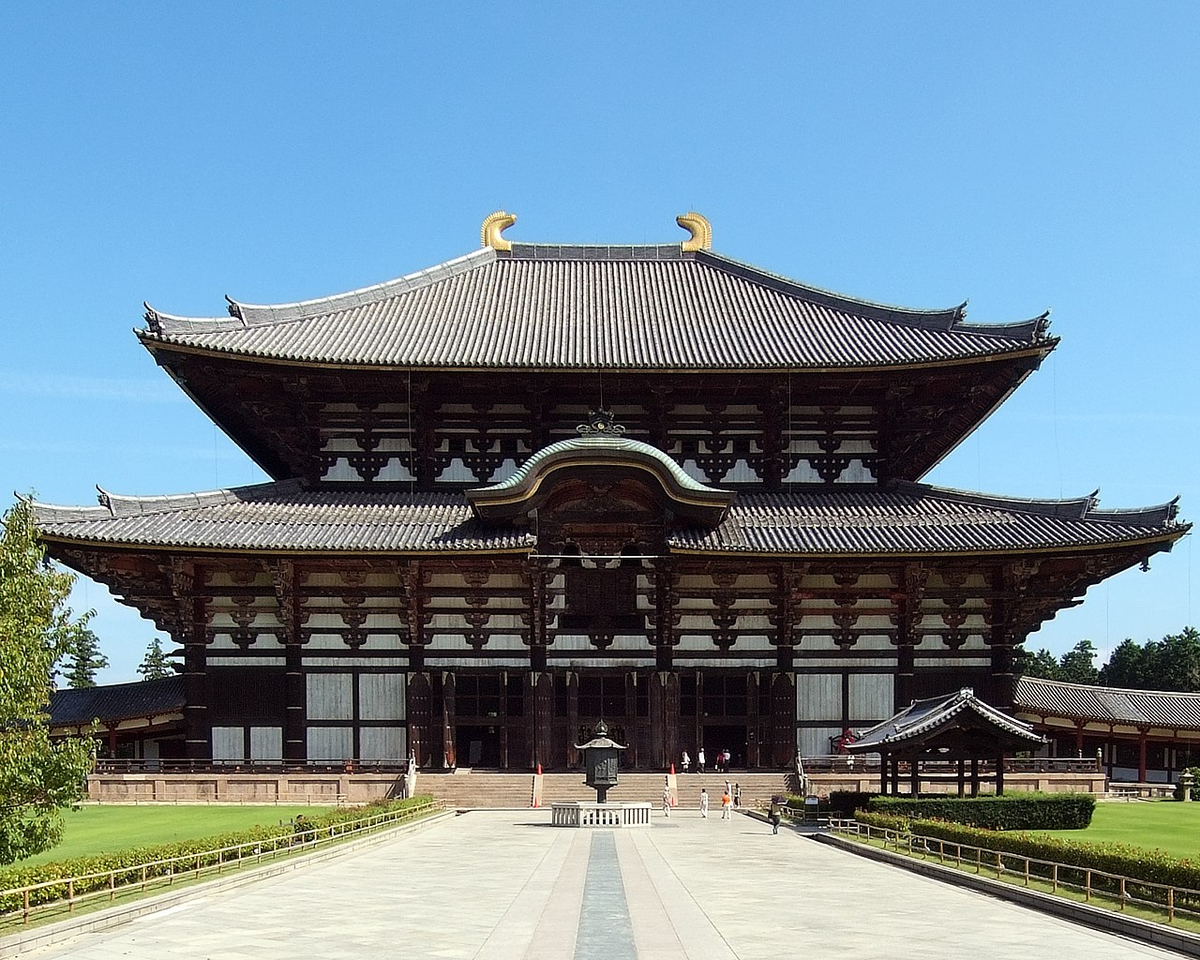
Construction of Tōdai-ji Temple in Buddhism
Todai-ji Temple, Nara, Japan
Buddhism
Architecture
4 min read
Updated By: History Editorial Network (HEN)
Published:
Updated:
The year 752 CE marked the official opening of Tōdai-ji, known as the “Great Eastern Temple,” in Nara, Japan, during the reign of Emperor Shōmu. The temple was established as the central institution in a nationwide network of provincial Buddhist temples, intended to strengthen state unity through religion. Located in the capital of Nara, Tōdai-ji became the headquarters of the Kegon school of Buddhism, reflecting the imperial court’s support for Buddhist teachings as a means of governance and social cohesion.
A key event of this opening was the consecration ceremony of the Great Buddha (Daibutsu), a bronze statue of Vairocana Buddha housed within the temple. Historical records indicate that the ceremony took place in 752 and was attended by monks, officials, and representatives from across Japan, as well as foreign monks from regions such as China and India. The statue stood approximately 15 meters tall and required extensive resources, including copper and gold, gathered from various provinces. The event symbolized both religious devotion and the authority of the central government during the Nara period.
Tōdai-ji’s establishment formalized its role as the leading temple within the state-sponsored Buddhist system. Over time, the temple complex expanded and became a focal point of religious activity, education, and administration. Despite damage from fires and natural disasters in later centuries, Tōdai-ji has been repeatedly restored and remains an important cultural and religious site in Japan today. It is now part of the UNESCO-listed “Historic Monuments of Ancient Nara,” recognized in 1998.
#mooflife
#MomentOfLife
#Todai-jiTemple
#BuddhismInJapan
#Gyōki
#Ganjin
#HeianPeriod
Primary Reference
Tōdai-ji

Explore the Life Moments of
 AI Twin