Albert Einstein's Birth in Ulm: A Catalyst for Revolutionary Scientific Contributions
German
Science
4 min read
Updated By: History Editorial Network (HEN)
Published:
Updated:
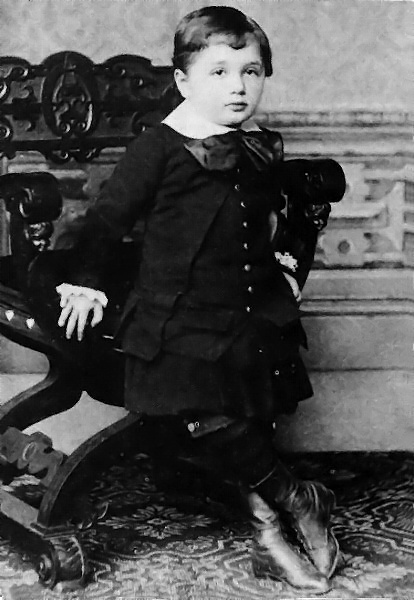
Albert Einstein was born in the town of Ulm, in the Kingdom of Württemberg within the German Empire. At the time of his birth, Ulm was a modest town situated on the banks of the River Danube. The political landscape of the Kingdom of Württemberg was characterized by its status as a constituent part of the German Empire, having been integrated into the Empire after its unification. The region merged a blend of rural and burgeoning industrial facets, sharing in the general socio-economic transformations of 19th-century Europe.
Albert Einstein's arrival into this environment laid the groundwork for one of the most impactful scientific careers in history. Although his beginnings in Ulm were humble, he would later become renowned for his contributions to theoretical physics. This would include the development of the theory of relativity, which fundamentally altered our understanding of space, time, and energy. These theoretical advancements would lead to revolutionary changes in various fields of science and technology, influencing numerous aspects of modern life and thought.
The importance of Einstein's future works is reflected in numerous statistics documenting his contributions, including more than 300 scientific papers and over 150 non-scientific works. His theoretical propositions were recognized globally, earning him accolades such as the Nobel Prize in Physics in 1921.
Albert Einstein’s birth in Ulm is a milestone that prefaces his journey toward becoming a pivotal figure in scientific history. It underscores the alignment of individual genius with broader historical currents in the realms of technology and intellectual advancement.
#AlbertEinstein #MoofLife #Science #Physics #Innovation #GermanEmpire #HistoricalImpact
Explore the Life Moments of
 AI Twin