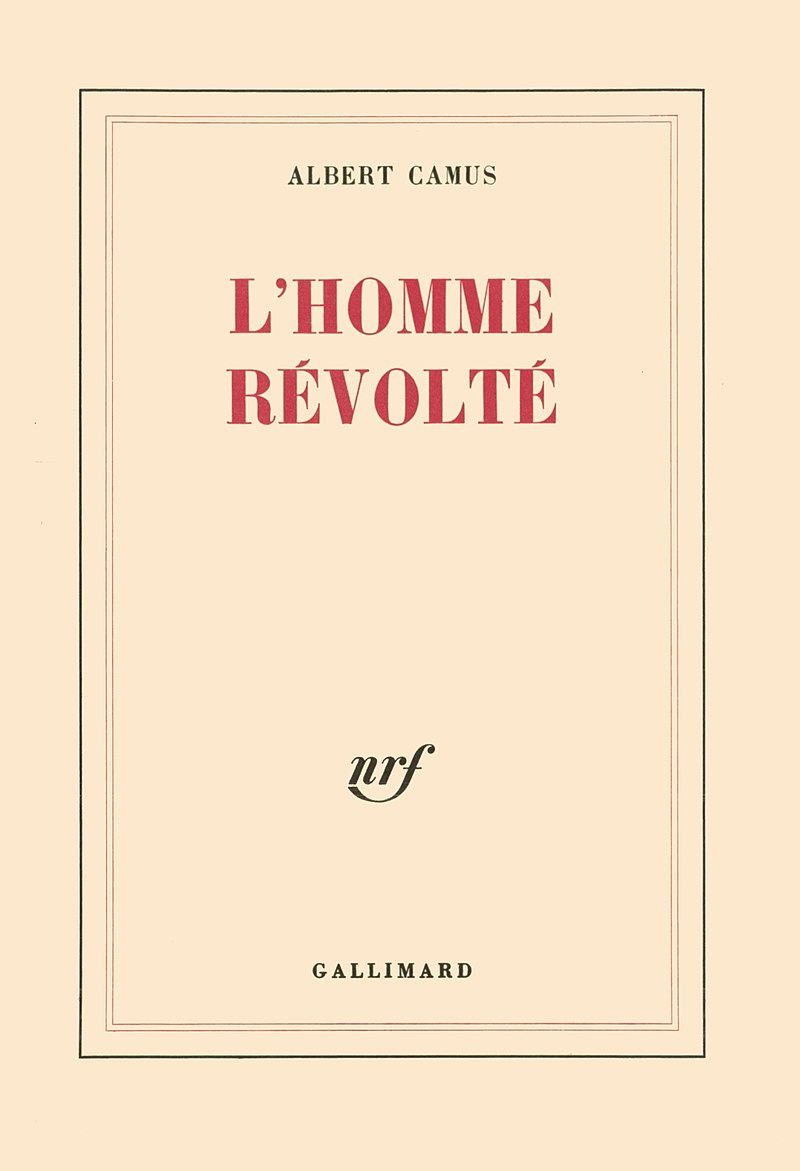
Camus's "The Rebel" explores rebellion's ethical implications, sparking intellectual debate and controversy.
France

Political
4 min read
Updated By: History Editorial Network (HEN)
Published:
Updated:
Albert Camus's "L'Homme révolté" was published on October 1, 1951. The work, translated as "The Rebel," delves into the nature of rebellion and its relationship with human existence. Camus, already renowned for his existentialist and absurdist themes, sought to explore the ethical implications of rebellion and revolution. The book traces historical revolts and the philosophy behind them, questioning whether rebellion can achieve a balance between the pursuit of justice and the avoidance of tyranny.
Upon its release, "L'Homme révolté" sparked widespread attention and critical debate. It brought significant controversy, especially within intellectual circles in France. Camus argued against the totalitarianism found in both fascism and communism, advocating for a form of rebellion that upholds human dignity and justice without succumbing to oppressive ideologies.
The publication of "L'Homme révolté" led to a notable rift between Camus and Jean-Paul Sartre. Sartre, a leading figure of existentialism and a prominent supporter of Marxist thought, critiqued Camus’s stance. The debate between Camus and Sartre polarized the intellectual community, influencing philosophical discussions within and beyond France.
The book's impact extended far beyond its initial controversy. Academia and literary circles have continued to revisit and analyze Camus's arguments. Camus's critique of ideological extremism and his plea for a moral form of rebellion resonate in various socio-political contexts. While its reception was initially mixed, many have come to view "L'Homme révolté" as a pivotal work in understanding the ethical dimensions of rebellion and resistance.
#AlbertCamus #TheRebel #Philosophy #Existentialism #Revolution #Justice #HumanRights #IntellectualDebate #MoofLife
Primary Reference
Editions of The Rebel by Albert Camus
Explore the Life Moments of
 AI Twin