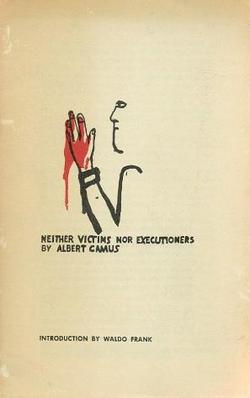
Camus challenges violence in post-war society in 'Neither Victims nor Executioners'.
France

Philosophy
Ethics
3 min read
Updated By: History Editorial Network (HEN)
Published:
Albert Camus, a French philosopher and writer, published a series of essays titled 'Neither Victims nor Executioners' in the French Resistance newspaper Combat. This publication occurred during a period of global reflection following the culmination of World War II. Combat, known for its contributions to intellectual discourse and resistance propaganda during the war, provided a platform for Camus' exploration of moral integrity, violence, and human dignity.
In 'Neither Victims nor Executioners,' Camus argues against both passive victimhood and active participation in violence, advocating for a middle path rooted in ethical principles. The essays criticize the cyclical nature of violence and retribution, suggesting that true progress requires refraining from both infliction of harm and submission to it. Camus emphasizes the need for a new moral framework in a world recovering from the atrocities of war, calling on individuals and societies to reject the binary roles of oppressor and oppressed.
The impact of these essays on readers was profound, prompting discussions about moral philosophy, the role of the individual in society, and the consequences of political and social violence. 'Neither Victims nor Executioners' contributed to post-war existentialist and humanist thought, reinforcing Camus' status as a leading intellectual figure.
#MoofLife #Camus #Philosophy #Ethics #PostWarThought #HumanDignity
Primary Reference
camus-neither-victims-nor-executioners.pdf
Explore the Life Moments of
 AI Twin