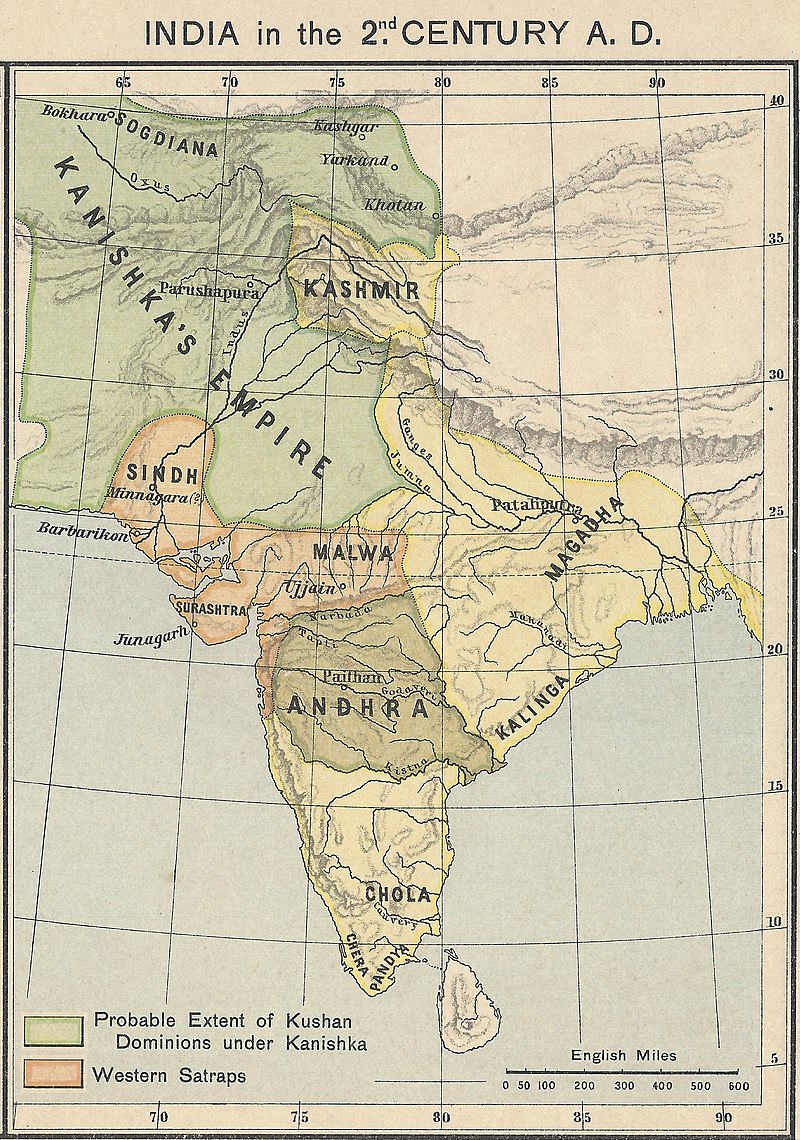
Rise of the Kushan Empire in the region becomes a significant historical milestone.
Afghanistan
Cultural Fusion
3 min read
Updated By: History Editorial Network (HEN)
Published:
The establishment of the Kushan Empire in Afghanistan marked a crucial turning point in the region's history. The Kushans, originally a nomadic tribe from Central Asia, rose to power through their military prowess and strategic alliances. Led by rulers such as Kujula Kadphises and Kanishka, the Kushan Empire expanded its territory, encompassing modern-day Afghanistan and parts of Central Asia, India, and China.
The Kushans played a significant role in connecting the East and West through their lucrative trade networks, facilitating the exchange of goods, ideas, and culture along the Silk Road. This cultural fusion is evident in the art and architecture of the period, most notably seen in the Gandharan style that combined Hellenistic and Indian influences.
The Kushan Empire's patronage of Buddhism, particularly under Emperor Kanishka, helped the religion spread along their trade routes and gain a foothold in the region. The empire's legacy endured long after its eventual decline, influencing the development of art, religion, and trade in Afghanistan and beyond.
#KushanEmpire #AfghanistanHistory #CulturalFusion #SilkRoad #Buddhism
Primary Reference
Kushan Empire - Wikipedia
Explore the Life Moments of
 AI Twin