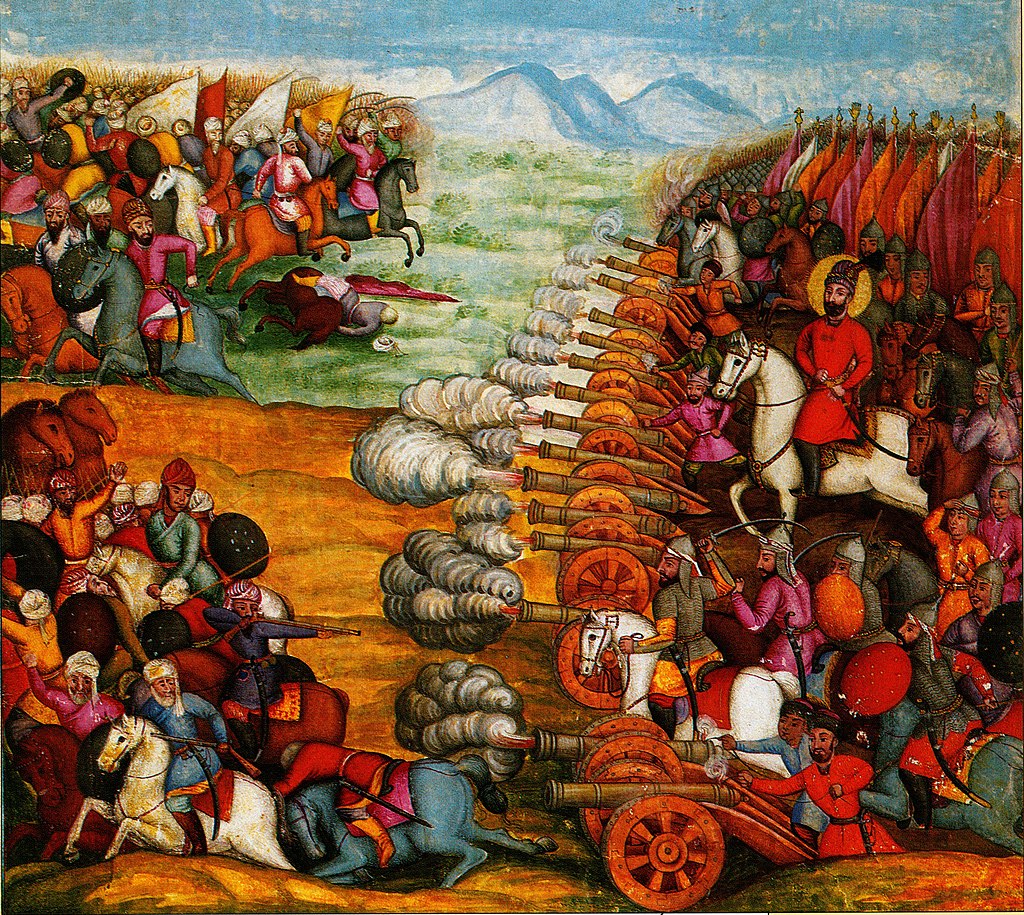
Battle of Damghan in 1729
Afghanistan
Political
8 min read
Updated By: History Editorial Network (HEN)
Published:
The Battle of Damghan, fought in 1729, was a pivotal conflict in Persian history, marking the decisive victory of Nader Shah over the Afghans, who had overrun Persia under the leadership of Ashraf Hotak. This battle was part of Nader Shah's efforts to restore the Safavid dynasty and expel the Afghan rulers from Persian territories.
Background
In the early 18th century, Persia was in turmoil. The Safavid Empire, once a formidable power in the region, had weakened due to internal strife and external pressures. In 1722, the Afghan leader Mahmud Hotak captured the Safavid capital of Isfahan, effectively ending the Safavid rule. His cousin, Ashraf Hotak, succeeded him and continued to control significant parts of Persia, including the capital.
Rise of Nader Shah
Nader Qoli Beg, later known as Nader Shah, emerged as a powerful military leader during this period of chaos. Initially serving under Tahmasp II, the exiled Safavid prince, Nader demonstrated exceptional military prowess and strategic acumen. By 1726, he had become the primary military leader for Tahmasp II, determined to reclaim Persia from the Afghan invaders.
The Battle
The Battle of Damghan took place in October 1729 near the city of Damghan in north-central Persia. Nader Shah's army, comprising about 30,000 men, faced the Afghan forces led by Ashraf Hotak, who commanded a larger force estimated to be around 50,000 troops.
Nader Shah's strategy was marked by his use of mobility and surprise attacks. Understanding the strengths and weaknesses of the Afghan forces, he meticulously planned his tactics to exploit their vulnerabilities. The battle began with a series of skirmishes, with Nader's forces engaging in guerrilla-style tactics to weaken the Afghans.
Decisive Victory
The turning point came when Nader Shah launched a full-scale assault on the Afghan camp. Using a combination of artillery, cavalry, and infantry, he executed a well-coordinated attack that overwhelmed Ashraf Hotak's forces. The Afghan army, despite its numerical superiority, was unable to withstand the disciplined and strategically superior Persian troops led by Nader.
The victory at Damghan was decisive. Ashraf Hotak's forces were decimated, and he was forced to retreat. This defeat shattered the Afghan hold over Persia and marked the beginning of the end for their dominion in the region.
Aftermath and Significance
The Battle of Damghan had profound implications for Persian history. It marked the resurgence of Persian power under Nader Shah, who would go on to become one of the most formidable rulers in Persian history. Following the victory, Nader continued his campaign against the Afghans, eventually driving them out of Persia entirely.
Nader's success at Damghan also bolstered the legitimacy of Tahmasp II, allowing him to reclaim the throne temporarily. However, Nader's ambition and military prowess soon eclipsed Tahmasp II, leading to Nader's coronation as Shah in 1736, effectively founding the Afsharid dynasty.
The battle demonstrated Nader Shah's tactical genius and established his reputation as a military leader capable of restoring Persian sovereignty and stability. It also marked the decline of the Afghan Hotak dynasty, which had briefly disrupted Persian dominance in the region.
Legacy
Nader Shah's victory at Damghan is remembered as a turning point in Persian history. It not only restored Persian pride and independence but also paved the way for Nader Shah's ambitious campaigns beyond Persia, including his infamous invasion of the Mughal Empire in India. His reign, marked by military brilliance and ruthless leadership, left a lasting legacy in the annals of Persian and regional history.
Hashtags
#MomentsOfLife #MoofLife_Moment #MoofLife #NaderShah #PersianHistory #BattleOfDamghan #AfsharidDynasty #SafavidRestoration #MilitaryStrategy
Explore the Life Moments of
 AI Twin