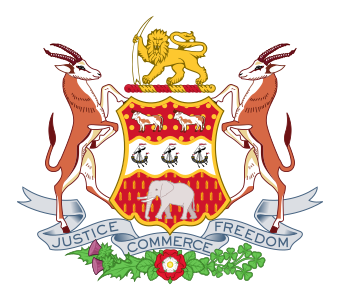
Royal charter granted for governance in Southern Africa by British South Africa Company.
Zimbabwe
Colonial Economic Imperialism
4 min read
Updated By: History Editorial Network (HEN)
Published:
The British South Africa Company (BSAC), spearheaded by Cecil Rhodes, received a royal charter from the British government for governance in Southern Africa. This charter authorized BSAC to administer and develop territories that are present-day Zimbabwe and Zambia. The approval aimed to extend British influence in the region and facilitated access to mineral resources, particularly gold and diamonds.
Under this charter, BSAC had the power to establish political systems, law enforcement, and the development of infrastructure. The charter also empowered BSAC to negotiate treaties, annex territories, and engage in diplomacy with local African leaders, who were often subjugated or coerced into agreements that favored British commercial interests.
Rhodes envisioned BSAC as a vehicle to advance British colonial objectives and secure economic dominance. The company's activities led to the establishment of colonial administration. This resulted in establishing urban centers and transportation networks essential for the movement of goods and resources.
BSAC's governance significantly impacted the local population. Indigenous lands were appropriated, leading to displacement and altered livelihoods. Native labor was often exploited in mining operations, leading to long-standing socio-economic imbalances. The charter also facilitated the influx of European settlers, which introduced new cultural dynamics and tensions.
Statistics from the period reflect burgeoning trade and investment in the region’s mining sector. Employment in mining and related industries saw an increase, influencing the region's demographics and economic practices. The company's focus on resource extraction accelerated local infrastructure development, albeit primarily benefiting colonial interests over indigenous populations.
#ColonialHistory #Zimbabwe #BritishEmpire #EconomicImperialism #IndigenousDisplacement #InfrastructureDevelopment #MoofLife

Explore the Life Moments of
 AI Twin