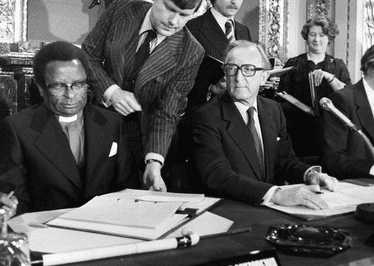
Path to Independence: Lancaster House Agreement
Zimbabwe
PoliticalAgreement
4 min read
Updated By: History Editorial Network (HEN)
Published:
The Lancaster House Agreement represented a pivotal moment in the history of Zimbabwe, marking the end of prolonged negotiations aimed at ending colonial rule. The discussions took place in London, with representatives from the British government, the white minority Rhodesian administration, and the Patriotic Front, a coalition of African nationalist groups led by Robert Mugabe and Joshua Nkomo.
The negotiations were challenging due to deeply entrenched positions. The Rhodesian regime, led by Ian Smith, had unilaterally declared independence from Britain, causing international isolation and sanctions. The nationalist factions, having waged a protracted guerilla war known as the Bush War, were adamant about achieving majority rule.
After weeks of deliberation, a consensus was reached. Key provisions included the establishment of a ceasefire, a transition to democratic elections, and the drafting of a new constitution that enshrined protections for minority rights and land reforms. The agreement provided for an interim British governor to oversee the transition period.
The immediate impact was the cessation of hostilities and laying the groundwork for the country's first democratic elections. Approximately 94% of the eligible population participated in the elections, which saw Robert Mugabe's Zimbabwe African National Union - Patriotic Front (ZANU-PF) win a decisive victory. This ushered in a new era of governance, marking the end of nearly a century of colonial and minority rule.
The Lancaster House Agreement also set a precedent for negotiated transitions from colonial rule to independence in Africa. It highlighted the role of diplomatic efforts and international cooperation in conflict resolution.
#ZimbabweIndependence #HistoricalAgreement #LancasterHouse #ColonialHistory #MoofLife
Primary Reference
Lancaster House Agreement, 21 December 1979. SOUTHERN ...

Explore the Life Moments of
 AI Twin