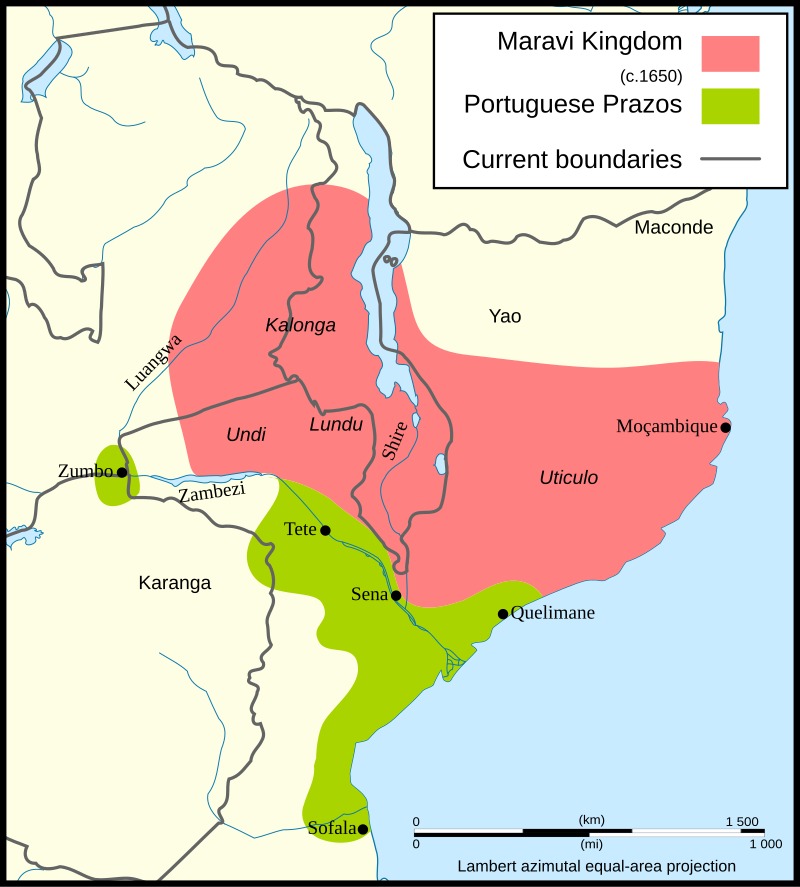
The Maravi Empire was founded by the Kalonga, stretching across modern Zambia, Malawi, and Mozambique.
Political
Global Trade
5 min read
Updated By: History Editorial Network (HEN)
Published:
The formation of the Maravi Empire marked a pivotal shift in southeastern Africa's political and social landscape. The Kalonga, a paramount leader of the Maravi people, established dominion that spanned across the territories of modern Zambia, Malawi, and Mozambique. This expansive realm became a melting pot of cultures and traditions, laying the groundwork for the region's future development.
The Maravi Empire stood as a beacon of centralized authority. Its leadership employed effective administrative strategies, uniting various independent chiefdoms under the Kalonga's rule. The consolidation of these regions fostered economic growth through robust trade networks. The Maravi people engaged in commerce involving items such as iron, salt, and agricultural produce, which were exchanged with neighboring communities and long-distance traders.
This growing economy was facilitated by the empire's strategic geographical position. It served as a crucial link between the African interior and coastal traders. The integration of these trade routes not only enriched the empire but also enhanced cultural exchanges. The spread of agricultural practices, artisan skills, and religious beliefs occurred through these interactions, knitting a diverse and vibrant societal fabric.
The influence of the Maravi Empire extended well beyond its political borders. Its governance model and economic structures navigated complex social hierarchies and localized governance forms. These mechanisms enabled the Maravi to assert control and maintain stability across a vast territory. Over time, this resulted in the flourishing of an elaborate cultural and linguistic legacy, remnants of which persist in the region today.
In historical context, the founding of the Maravi Empire represents the harnessing of localized power into a formidable centralized entity. This example of statecraft underscores the potential for indigenous polities to establish and sustain administrative and economic systems that significantly impact their regions. The Maravi Empire's legacy is encapsulated in the continuing cultural and societal contributions of the Maravi people to modern Zambia, Malawi, and Mozambique.
#MaraviEmpire #KalongaLeadership #PoliticalUnification #TradeNetworks #SoutheasternAfrica #ZambianRoots #MoofLife
Primary Reference
Kingdom of Maravi
Explore the Life Moments of
 AI Twin