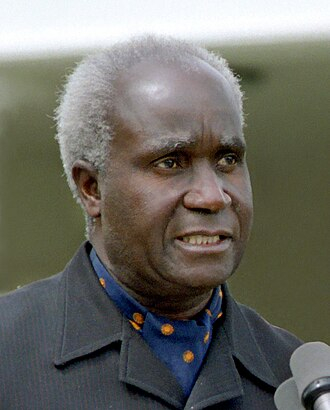
Kaunda disqualified from presidential election.
Political
4 min read
Updated By: History Editorial Network (HEN)
Published:
Kenneth Kaunda, Zambia’s first president, sought to return to the presidency as political changes swept through the country. However, legislative moves altered the course of his ambitions. A newly instituted constitutional amendment required presidential candidates to be Zambian by birth and have both parents also Zambian by birth. This effectively disqualified Kaunda, whose parents were from Malawi.
Kaunda had relinquished power peacefully after multi-party elections reintroduced democracy to Zambia. The elections saw Frederick Chiluba, from the Movement for Multi-Party Democracy (MMD), ascend to the presidency. Kaunda later became an outspoken opponent of the MMD government, critiquing economic policies and rising corruption. His plans to contest again rallied strong support from his loyal United National Independence Party (UNIP) base.
The amendment faced criticism from various quarters, viewed as a deliberate move to exclude Kaunda. Political analysts and opponents labeled it an attempt to consolidate power by limiting electoral competition. Supporters of the amendment argued it safeguarded national interests and reflected necessary constitutional reforms.
The immediate effect was a polarization in Zambian politics. UNIP and Kaunda’s supporters saw the amendment as undemocratic and rallied protests. Internationally, the move garnered mixed reactions. Some saw it as a stance against dynastic politics, while others condemned it as undemocratic.
Kaunda’s disqualification from the presidential race marked a turning point in Zambian political dynamics. This event underscored the tensions between emerging democratic institutions and entrenched political legacies in post-colonial Africa.
#ZambiaPolitics #ConstitutionalChange #KennethKaunda #UNIP #MMD #Election #PoliticalStrategy #MoofLife
Primary Reference
1996 Human Rights Report: Zambia
Explore the Life Moments of
 AI Twin