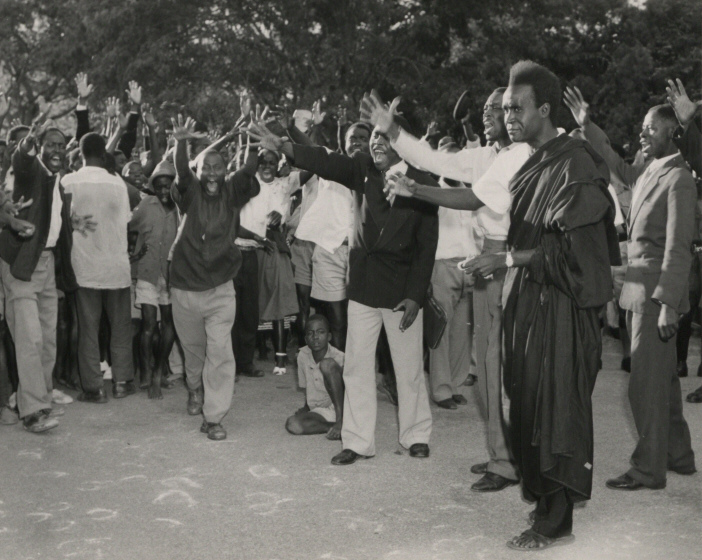
Kenneth Kaunda becomes Prime Minister after Zambia gains independence from Britain.
Political
Global Trade
5 min read
Updated By: History Editorial Network (HEN)
Published:
In the heart of Africa, Zambia achieved a milestone by gaining independence from Britain, marking an end to decades of colonial rule. The rise of nationalist movements, driven by grievances over racial discrimination and land distribution, set the stage for liberation. As British colonial policies became increasingly contested, sentiments of self-determination grew stronger among Zambians.
Kenneth Kaunda, a key leader in the independence movement, played a pivotal role. His United National Independence Party (UNIP) mobilized large segments of the population, advocating for national sovereignty and social justice. Through persistent efforts and negotiations with British authorities, Zambia's transition to independence was set into motion.
Kaunda's election as Prime Minister was a moment of pivotal change. As a charismatic leader, he promised to shape a unified, independent nation. Under his leadership, initiatives to address education, healthcare, and infrastructure development were prioritized. This period also saw the gradual phasing out of colonial legal frameworks in favor of more autonomous governance structures.
Economically, Zambia held significant promise, notably because of its rich copper deposits. At the time, copper contributed to a substantial portion of the nation's revenue, facilitating investments in public services and development projects. The government's focus on nationalizing industries sought to ensure that the benefits of natural resources were more equitably distributed.
Amidst these transformations, Zambia's independence reverberated beyond its borders. It inspired other nations in the region to pursue their own paths to freedom, contributing to the broader wave of decolonization sweeping across Africa. Internationally, Zambia's new status attracted attention, leading to diplomatic engagements and the establishment of bilateral relationships aimed at fostering economic and social development.
In the context of global Cold War politics, Zambia's neutral stance allowed it to maintain strategic relationships with both Western and Eastern blocs, providing a balanced approach to foreign policy. This diplomatic flexibility underscored Kaunda's vision for an independent Zambia.
#ZambiaIndependence #KennethKaunda #Decolonization #EconomicDevelopment #NationalSovereignty #MoofLife
Primary Reference
Zambians campaign for independence, 1944-1964 | Global ...
Explore the Life Moments of
 AI Twin