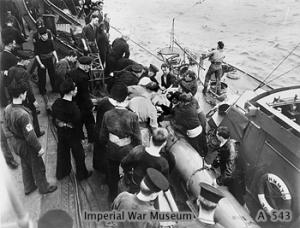
Sinking of Royal Navy Destroyers at Texel
Germany
'%3e%3cpath fill='%23012169' d='M0 0v30h60V0z'/%3e%3cpath stroke='%23fff' stroke-width='6' d='m0 0 60 30m0-30L0 30'/%3e%3cpath stroke='%23C8102E' stroke-width='4' d='m0 0 60 30m0-30L0 30' clip-path='url(%23b)'/%3e%3cpath stroke='%23fff' stroke-width='10' d='M30 0v30M0 15h60'/%3e%3cpath stroke='%23C8102E' stroke-width='6' d='M30 0v30M0 15h60'/%3e%3c/g%3e%3c/svg%3e)

Military
Naval
3 min read
Updated By: History Editorial Network (HEN)
Published:
Updated:
The Texel Disaster refers to the sinking of two Royal Navy destroyers off the Dutch coast, a notable event during military operations in the early 1940s. The destroyers were part of a larger naval strategy aimed at securing control over the North Sea and supporting ground operations in Europe. The incident occurred amidst ongoing Luftwaffe attacks on British airfields and radar installations, which were critical to the defense of Britain. Despite the Luftwaffe's efforts, their attacks on radar installations were largely ineffective, allowing the Royal Navy to maintain some level of operational capability. However, the sinking of the destroyers highlighted vulnerabilities in naval operations and the risks associated with maritime engagements during this period of conflict.
The impact of the Texel Disaster was significant for the Royal Navy, as it underscored the dangers faced by naval vessels in contested waters. The loss of the destroyers not only affected naval strength but also had implications for morale and strategic planning. The event served as a reminder of the challenges posed by enemy air power and the need for improved coordination between naval and air forces. In the broader context of World War II, the sinking of the destroyers contributed to the evolving tactics and strategies employed by both the Allies and Axis powers, influencing future naval engagements and the importance of air cover in maritime operations.
#mooflife
#MomentOfLife
#TexelDisaster
#RoyalNavy
#Destroyers
#WorldWarIi
#NavalOperations
Primary Reference
Texel Disaster

Explore the Life Moments of
 AI Twin