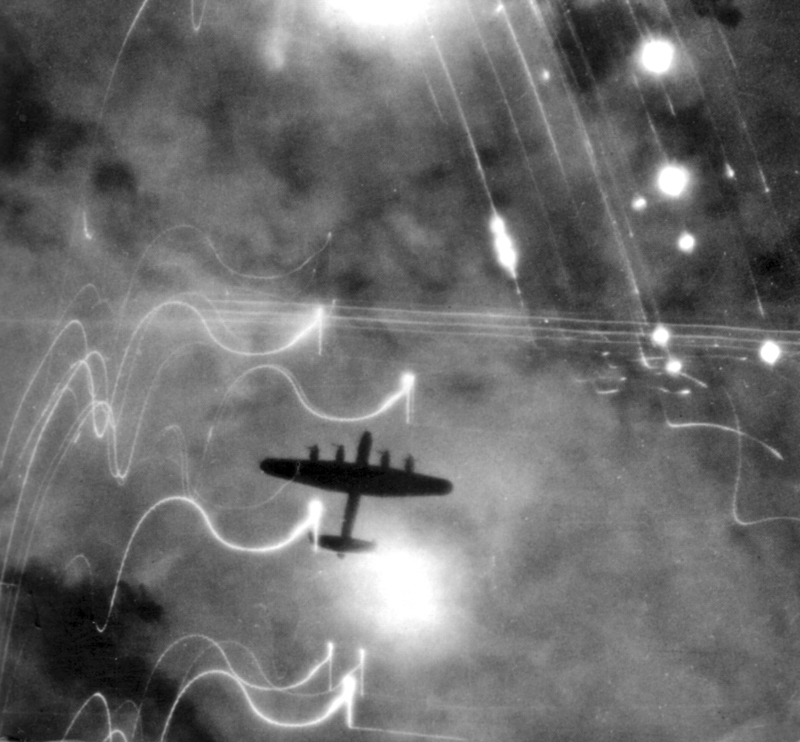
RAF Bombing Campaign Against German Cities
Germany

'%3e%3cpath fill='%23012169' d='M0 0v30h60V0z'/%3e%3cpath stroke='%23fff' stroke-width='6' d='m0 0 60 30m0-30L0 30'/%3e%3cpath stroke='%23C8102E' stroke-width='4' d='m0 0 60 30m0-30L0 30' clip-path='url(%23b)'/%3e%3cpath stroke='%23fff' stroke-width='10' d='M30 0v30M0 15h60'/%3e%3cpath stroke='%23C8102E' stroke-width='6' d='M30 0v30M0 15h60'/%3e%3c/g%3e%3c/svg%3e)
Military
World War II
4 min read
Updated By: History Editorial Network (HEN)
Published:
Updated:
The RAF bombing campaign against German cities was a strategic military operation aimed at crippling Germany's industrial capabilities and morale during the conflict. The campaign involved extensive aerial bombardments targeting key urban centers, including Hamburg, Emden, and Berlin. These cities were chosen due to their significance in terms of industrial output and military infrastructure. The bombings were part of a broader strategy to weaken the German war effort by disrupting supply lines and diminishing the production of war materials. The impact of these bombings was profound, leading to significant destruction of property and loss of civilian life. The campaign also aimed to instill fear and undermine the resolve of the German populace, contributing to the overall psychological warfare aspect of the conflict. Statistics indicate that the bombings resulted in thousands of civilian casualties and extensive damage to residential and commercial areas, which further fueled anti-war sentiments among the German population.
The RAF's bombing strategy evolved over time, with tactics becoming more sophisticated as the war progressed. The use of incendiary bombs was particularly devastating, as seen in the firebombing of Hamburg, which resulted in one of the most destructive firestorms in history. The campaign faced criticism for its impact on civilians and the ethical implications of targeting urban centers. Despite this, the RAF maintained that the bombings were necessary to hasten the end of the war. The bombing campaign also had a significant effect on post-war reconstruction efforts in Germany, as cities had to be rebuilt from the ground up. The legacy of the RAF bombing campaign continues to be a topic of discussion among historians, particularly regarding its effectiveness and moral justification in the context of total war.
#mooflife
#MomentOfLife
#RafBombingCampaign
#GermanCities
#WorldWarIi
#AerialBombardment
#MilitaryStrategy

Explore the Life Moments of
 AI Twin