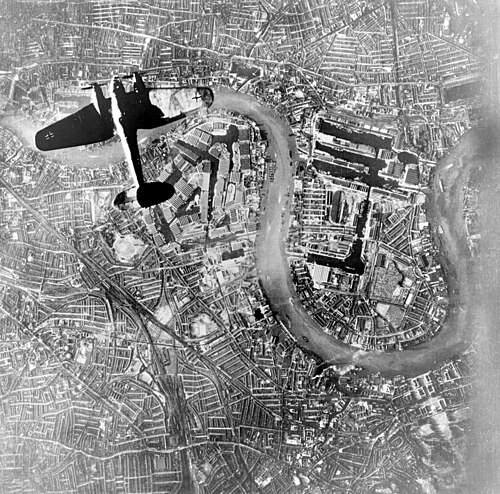
Luftwaffe shifts focus to London
Germany
World War II
Military History
Aerial Warfare
4 min read
Updated By: History Editorial Network (HEN)
Published:
Updated:
The Luftwaffe's strategic shift to target London marked a pivotal change in the aerial conflict during World War II. Initially focused on Royal Air Force (RAF) airfields, this decision was influenced by the desire to cripple British air defenses. However, the shift to bombing London and other cities resulted in significant civilian casualties, with estimates indicating around 2,000 deaths. This campaign, known as the Blitz, aimed to demoralize the British population and force the government to negotiate peace. Instead, it galvanized British resolve and unity against the Axis powers. The Blitz not only inflicted physical damage on London but also had profound psychological effects, as the British public endured relentless bombing raids while maintaining their daily lives and activities. The resilience displayed during this period became a symbol of British determination and resistance against Nazi aggression.
The impact of the Luftwaffe's focus on London extended beyond immediate military objectives. The extensive bombing campaigns led to widespread destruction of infrastructure, homes, and cultural landmarks, significantly affecting the urban landscape. The British government implemented various measures to protect civilians, including the establishment of air raid shelters and the organization of civil defense units. Despite the destruction, the British economy adapted, with factories shifting to wartime production and communities coming together to support one another. The Blitz ultimately failed to achieve its intended goal of breaking British morale, instead fostering a sense of national identity and resilience that would play a crucial role in the eventual Allied victory. The Luftwaffe's miscalculation in targeting civilians rather than military installations is often cited as a turning point in the air war, illustrating the complexities and consequences of strategic decisions in warfare.
#mooflife
#MomentOfLife
#Luftwaffe
#London
#Blitz
#WorldWarIi
#Raf
Primary Reference
The Blitz

Explore the Life Moments of
 AI Twin